Boating in Sweden: rules, best areas and practical tips
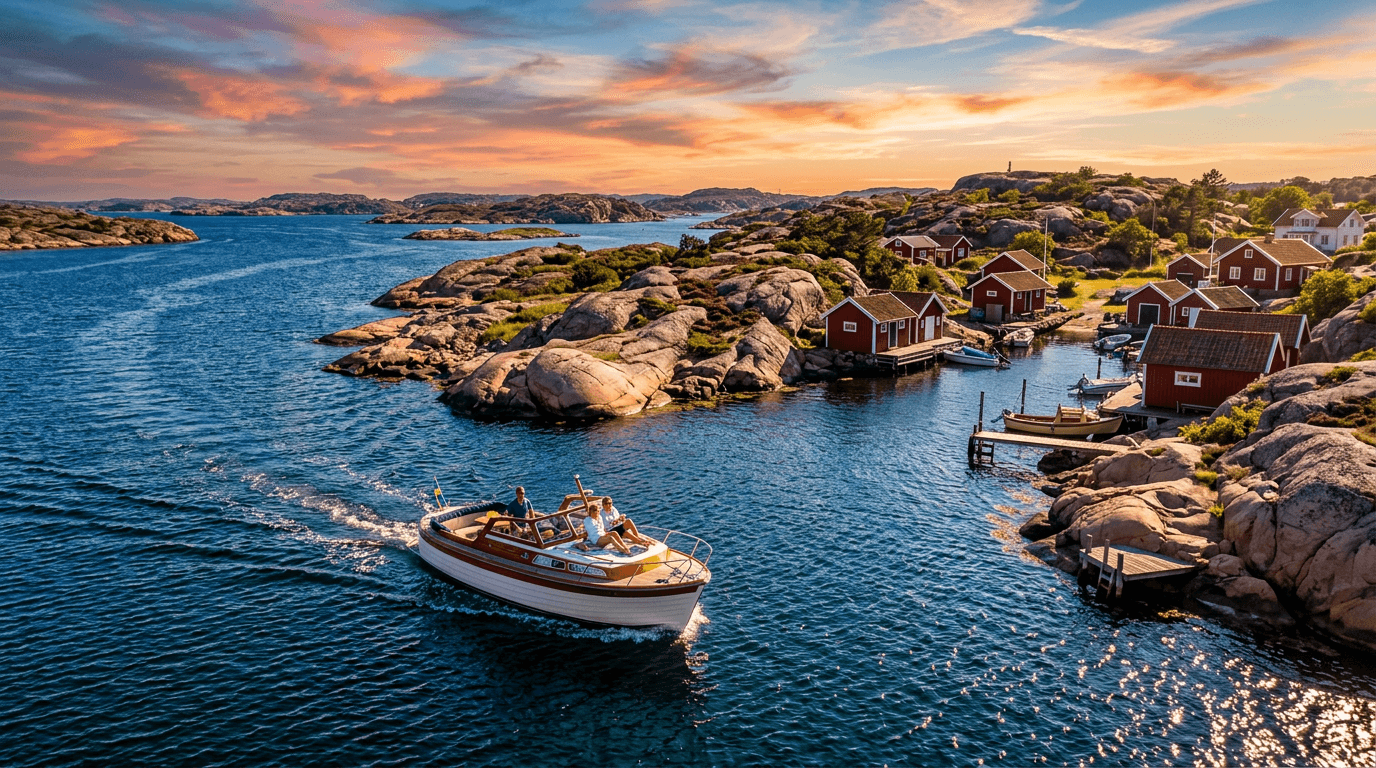
Boating in Sweden means archipelagos with thousands of islands, big lakes such as Mälaren and Vänern, the Göta Canal, and allemansrätten – the right of public access – which lets you tie up at an island away from people's homes. An ordinary leisure boat under 12 metres needs no licence, but rules on alcohol, speed and consideration apply to everyone. This guide covers renting from a private owner, the rules, the best areas, when to go and what to check before you cast off.
How does renting a boat in Sweden work?
On Ship O'Hoi, private owners rent out their own boats: motorboats, RIBs, daycruisers, bowriders, sailboats and small open boats. Most are rented by the day, some for a weekend or a week. Each owner states in the listing what experience, certificate and minimum age they require, and some owners can come along as skipper if you would rather not drive yourself. If you are unsure whether a private boat or a charter yacht suits you better, see our comparison of boat rental and charter in Sweden.
Before you book, agree on a few things with the owner:
- Pickup and return: where the boat is moored, when you get it and how it should be handed back.
- Fuel: whether the tank is full at pickup and whether you refuel before returning.
- Area limits: how far you may go, and whether the owner wants you to stay inside the archipelago.
- Safety equipment: life jackets in the right sizes for everyone on board, a chart or chart app, and a way to call for help.
- Walk-through: ask for a short run-through of engine, mooring and anchor before you leave.
Boating rules in Sweden
The rules are few, but they apply to everyone at the helm.
Boating licence
According to the Swedish Transport Agency (Transportstyrelsen), there is currently no licence requirement for a leisure boat that is under 12 metres long or under 4 metres wide, whatever the engine power. Only when a boat is at least 12 metres long and at least 4 metres wide must the skipper hold a skipper's or coastal skipper's certificate or higher nautical qualification. The exception is jet skis, which always require an operator's certificate. Because the requirement depends on the size of the boat, a visitor from abroad needs no certificate for an ordinary rental boat either – but the owner can always ask for experience or a certificate. Read more in our guide to boating licence rules in Sweden.
Alcohol
The limit for drink-driving at sea is 0.2 per mille blood alcohol and applies to every boat that can do at least 15 knots or has a hull at least 10 metres long. It covers the person driving and anyone with tasks important to safety on board. At 1 per mille or more you will normally be convicted of gross drink-driving at sea, and the Coast Guard and the police may carry out random sobriety checks (Transportstyrelsen).
Speed and wash
There is no general speed limit on Swedish waters. Speed limits are set locally by the county administrative board, Länsstyrelsen (Transportstyrelsen on local sea traffic rules), and marked with signs. In narrow sounds, canals and harbours, 5, 7 or 8 knots is common, and some limits only apply in the summer months. Never go faster than conditions allow, and as skipper you must show consideration for others who may be disturbed – including with the wash you leave at jetties, swimming spots and moored boats.
The right of public access on the water
Allemansrätten also applies from a boat. According to the Swedish Environmental Protection Agency (Naturvårdsverket), you may go ashore, swim, anchor and moor temporarily at a shore that is not part of someone's private garden (tomt), and you may stay on board for a day or two. There is no set minimum distance to houses – what matters is the risk of disturbing residents. Boathouses and jetties belonging to a garden are private; a jetty outside garden land that cannot be seen from the house may be borrowed briefly, but move if the owner arrives. For longer stays, ask the landowner. National parks and nature reserves can have their own mooring rules.
Bird and seal protection areas
At bird and seal sanctuaries you may not go ashore during parts of the year, and sometimes not even stay on the water nearby. The periods differ – in the Pater Noster archipelago off Tjörn there is an access ban from 1 April to 15 July, while on Svenska Högarna in the Stockholm archipelago different zones are closed at different times between February and August. The bans are often marked with yellow or red-and-yellow signs and shown on the chart. Each county's Länsstyrelsen has the details.
Toilet waste
It is forbidden to discharge toilet waste from leisure boats into the sea, lakes or rivers anywhere in Sweden, and has been since 1 April 2015 (Transportstyrelsen). Holding tanks are emptied at pump-out stations ashore. Without a toilet on board, use one ashore or a bucket with a tight lid.
Life jackets and safety
Transportstyrelsen compares the life jacket with the seat belt in a car: everyone on board should have a life jacket in the right size, and children and adults who cannot swim should wear a lifejacket with a collar (räddningsväst). Inflatable life jackets are only for swimmers. Whoever drives the boat is responsible for making sure it is seaworthy and adequately equipped, and that it is handled with good seamanship.
Large ships and narrow channels
Sweden follows the international collision regulations (COLREG). In a narrow channel, boats under 20 metres and sailing boats must not impede a vessel that can only navigate safely within the channel. Large ships cannot turn or stop quickly and have a big blind spot ahead of the bow. Cross the fairway at right angles, preferably astern of the ship, and keep close to the starboard edge of the channel.
The best boating areas in Sweden
Stockholm archipelago
The Stockholm archipelago stretches from Fjäderholmarna close to the city out to Svenska Högarna, and from Arholma in the north to Landsort in the south, with islands such as Vaxholm, Grinda, Finnhamn, Möja, Sandön and Utö. Read our guide to the most beautiful islands in the Stockholm archipelago, and see boat rental in Stockholm, boats for rent in Dalarö in the southern archipelago and boat rental in Norrtälje in the north.
Lake Mälaren
Mälaren is a freshwater lake of 1,140 square kilometres with many islands and inlets, stretching from Västerås and Sigtuna all the way into Stockholm. The Viking town of Birka on Björkö is a UNESCO World Heritage site and a classic boat excursion. Find out more in our guide to boating on Lake Mälaren and among the boats in Mariefred, a small town on the shores of Mälaren.
Gothenburg archipelago
The Gothenburg archipelago has a southern part with car-free islands such as Styrsö, Donsö, Vrångö and Brännö, and a northern part with islands such as Hönö, Öckerö and Rörö. Read our guide to the Gothenburg archipelago by boat and see boat rental in Gothenburg.
Bohuslän
Bohuslän on the west coast means salt-sprayed granite rocks, fishing villages and seafood, from Tjörn and Orust in the south via Marstrand, Lysekil, Smögen and Kungshamn to Fjällbacka, Strömstad and the Koster islands. Kosterhavet is Sweden's first marine national park. Marstrand, known for regattas and Carlsten Fortress, has a guest harbour that is open all year. Our guides to the best spots in Bohuslän by boat and sailing to Marstrand have the tips, and you will find boats through boat rental in Marstrand, boat rental in Kungshamn on the Sotenäs peninsula and boat rental in Fjällbacka.
Öresund
The Öresund strait separates Skåne from Denmark. The Öresund Bridge links Malmö and Copenhagen, and in the middle of the strait lies Ven, a small island between Landskrona and Denmark with a Tycho Brahe museum and cliffs dropping straight into the sea. The ferry to Ven runs from Landskrona, so keep a lookout for ferry traffic. Read our guide to the Öresund by boat: Malmö and Helsingborg and see boat rental in Malmö.
Blekinge and Karlskrona
Karlskrona was founded in 1680 as the base of the Swedish navy and is now a UNESCO World Heritage site – a city built on the sea, with bridges between its islands. The naval city is an unusual sight from the water. Read more about Karlskrona and the Blekinge archipelago by boat and see boat rental in Karlskrona.
Östergötland archipelago
The Östergötland archipelago is made up of the Arkösund, St Anna and Gryt archipelagos and part of Tjust, with thousands of islands, many of them uninhabited. Popular destinations include Fyrudden, Harstena and Häradskär. It is a part of the coast that is still largely unexploited. Read our guide to the Gryt archipelago by boat and see boat rental in Gryt.
Gotland and Öland
Gotland, with the medieval town of Visby, and Öland, with its traces of the Viking age, are for those who want to combine boating with island life in the Baltic. The crossing from the mainland is over open sea, so it is often simplest to rent a boat there. See our guide to an island holiday on Gotland and Öland by boat.
Lake Vänern and the Göta Canal
Vänern is Sweden's largest lake at 5,650 square kilometres, with its own archipelago – the car-free island of Brommö near Mariestad is one example. At Sjötorp on Vänern the Göta Canal begins: 190 kilometres and 58 locks to Mem on the Baltic coast. The canal is open to leisure boats roughly from May to September, with a speed limit of 5 knots. Read our guide to Lake Vänern by boat and see boat rental in Mariestad.
| Area | Character | Best for | Guide |
|---|---|---|---|
| Stockholm archipelago | Archipelago, inner islands to open sea | Day trips, island hopping, harbour restaurants | Most beautiful islands in the Stockholm archipelago |
| Lake Mälaren | Freshwater lake with islands and bays | Calm days, history, swimming | Boating on Lake Mälaren |
| Gothenburg archipelago | Bare rocky islands, car-free islands | Short trips from the city | Gothenburg archipelago by boat |
| Bohuslän | Rocky coast, fishing villages | Seafood, sailing, national park | Best spots in Bohuslän |
| Öresund | Open strait | Experienced skippers, Ven | Öresund by boat |
| Blekinge | Archipelago around a naval city | World Heritage, day trips | Karlskrona and the Blekinge archipelago |
| Östergötland | Sparsely populated archipelago | Quiet bays, nature | Gryt archipelago by boat |
| Gotland and Öland | Open Baltic coast | Island holidays | Gotland and Öland by boat |
| Lake Vänern | Large lake with an archipelago | Longer trips, Göta Canal | Lake Vänern by boat |
Best time for boating in Sweden
The sailing season in Sweden runs from June to September, and in high summer it is only dark for a few hours a night. Guest harbours (gästhamn, a harbour with berths for visiting boats) are mostly staffed in summer only, but periods differ: Marstrand's guest harbour office is staffed from May to September, Kungshamn's in the high season from June to August and Lysekil's municipal guest harbours from April to September, while some harbours are open all year. Check your harbour.
Weather matters more than the calendar. The Swedish Meteorological and Hydrological Institute (SMHI) publishes sea and coastal forecasts for the whole Swedish coast and Lake Vänern – check them the evening before and again in the morning.
Practical tips
- Charts: the Swedish Maritime Administration (Sjöfartsverket) produces Sweden's official nautical charts, and its data is also used by the private companies that make chart apps and plotters for leisure boats. Always have an up-to-date chart or chart app on board.
- Guest harbours: often only some berths can be booked and the rest are first come, first served, so arrive in good time in the afternoon during the high season. Fees vary from harbour to harbour.
- Fuel: many guest harbours have a fuel dock, but not all. Plan refuelling before you head out.
- Calling for help: in an emergency, call 112 and ask for sea rescue (sjöräddning), or call Sweden Rescue on VHF channel 16. Turn on location services on your phone so your position can be sent, and keep the phone charged in a waterproof case.
- Swedish Sea Rescue Society (Sjöräddningssällskapet): the volunteer sea rescuers have rescue stations around the country, and their Kustväder app gives detailed weather forecasts for places along the coast.
- Weather: fog, thunderstorms and strong wind can change conditions during the day. Turn back in good time rather than taking a chance.
- Packing: layers, sun protection, water, food and a bag for your rubbish.
FAQ
Do I need a boating licence in Sweden?
No, not for a leisure boat under 12 metres long or under 4 metres wide (jet skis excepted). The owner may still ask for experience or a certificate.
Can I anchor anywhere?
Not quite. You may anchor for a day or two at shores that are not part of a private garden, but avoid bird and seal sanctuaries in their protection period and follow anchoring bans.
Can a foreigner rent a boat in Sweden?
Yes. No Swedish licence is needed for an ordinary leisure boat, but each owner sets the experience required and some can come along as skipper.
What is the drink-driving limit on the water?
0.2 per mille for boats that can do at least 15 knots or are at least 10 metres long. At 1 per mille or more it is normally treated as gross drink-driving at sea.
When is the boating season in Sweden?
June to September. Guest harbour services vary, and the Göta Canal is open roughly May to September.
If you are planning your first boat day in Sweden, our guide to the most beautiful islands in the Stockholm archipelago is a good place to start – and if the west coast is calling, Bohuslän is waiting.