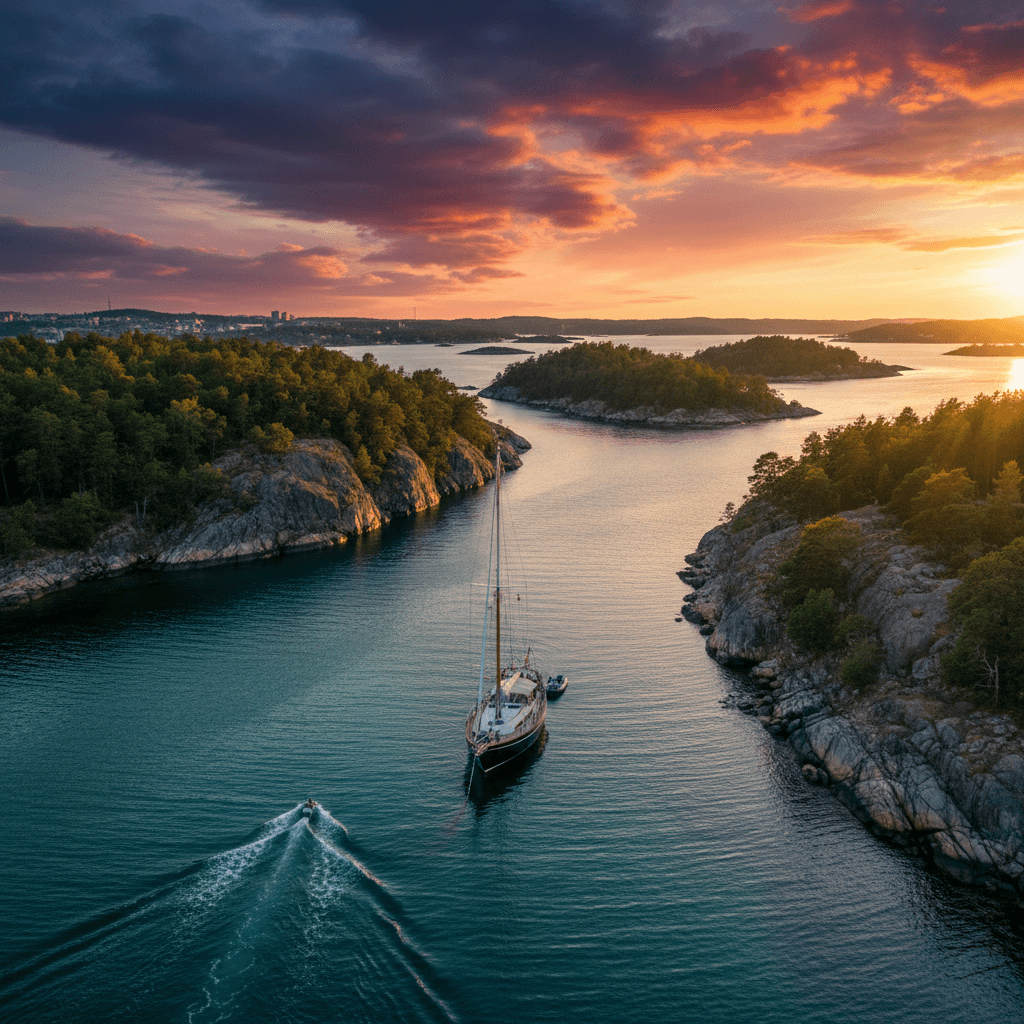
Færder and Tjøme by boat: Verdens Ende, Hvasser, Bolærne
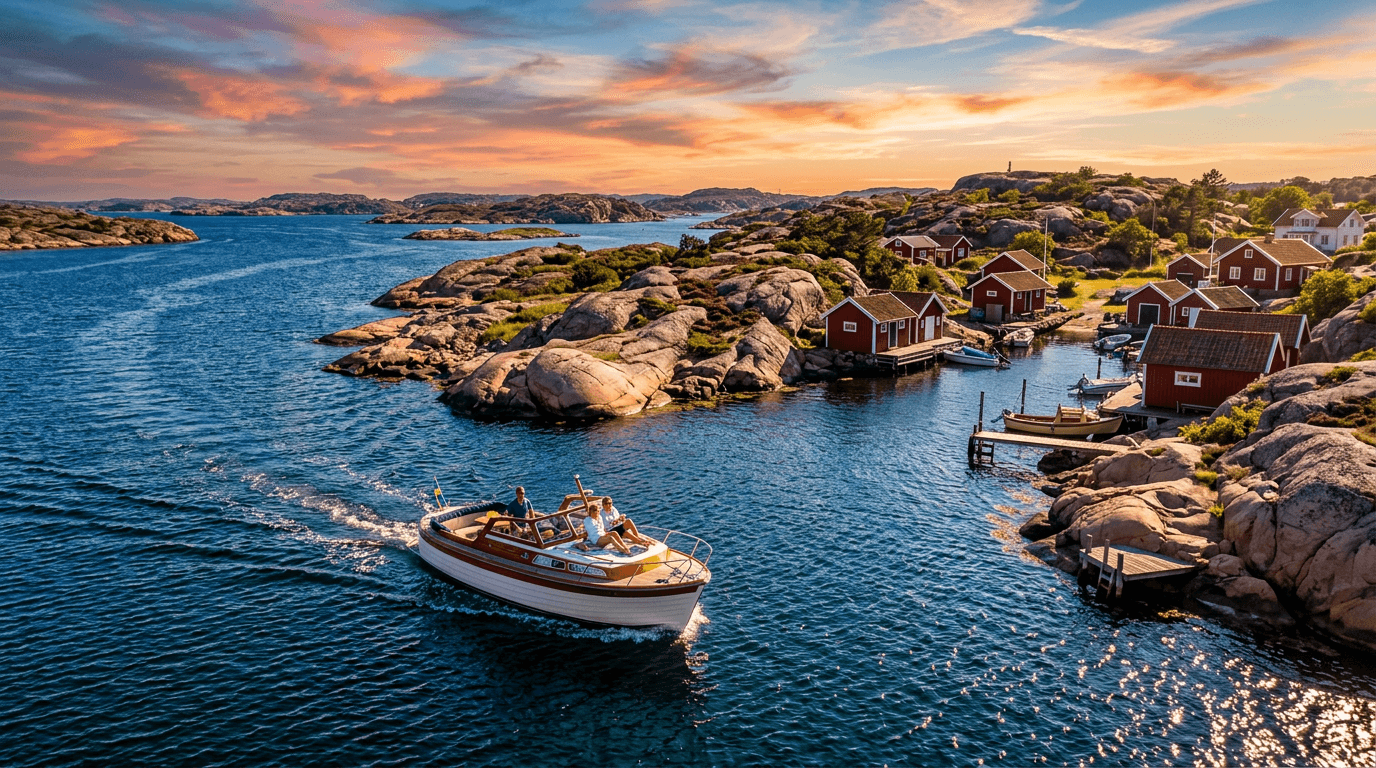
Færder and Tjøme are where the Oslofjord meets the open sea. Just off Tjøme and Hvasser lies Færder National Park: 340 square kilometres of sea, islands and skerries, with Færder lighthouse as the fjord's best-known landmark and Bolærne as an island harbour out in the fjord. By boat you can hop between the guest harbours at Verdens Ende, Hvasser and Bolærne, visit car-free Veierland, or cruise the sheltered inner route to the waterfront in Tønsberg.
Where can you rent a boat in Tjøme and Færder?
Private owners rent out their own boats all around the archipelago. Browse boats for rent in Tjøme, rent a boat in Færder, boats for rent on Nøtterøy and boats for rent in Tønsberg. Each owner states their own licence and experience requirements, and some owners can come along as skipper. If you plan to go out to Færder lighthouse or across to Bolærne, tell the owner in advance.
6 boat trips in Færder and Tjøme
The distances below are rough estimates from the map. Use a nautical chart or a chart app when you plan. A gjestehavn is a guest harbour, where visiting boats can moor for a day or a night.
Verdens Ende and Færder lighthouse
Approx. 5 nautical miles from the Verdens Ende guest harbour out to Færder lighthouse on the islet of Tristein, about half an hour each way at an easy pace. Verdens Ende ("World's End") is the southern tip of Tjøme, with a lever-arm beacon built of beach stones in 1932, smooth rocks and the national park visitor centre. Færder lighthouse is a 43-metre cast-iron tower from 1857. The first light stood on the neighbouring island of Store Færder from 1697, and only ruins remain there today.
Verdens Ende guest harbour has approx. 100 guest berths behind its own breakwater, a service building with toilets, showers and a washing machine, and a septic pump-out station. It does not take reservations, so arrive early on fine summer days.
Tip: Enjoy the lighthouse from the water. The station is a protected heritage site, and Vestfold County refers visitors to the Friends of Færder Lighthouse (Færder fyrs venner) for visiting information. Check it before you plan to go ashore. Out here you are exposed to the open sea, so turn back if the wind picks up.
Hvasser and Sandøsund
Approx. 3 nautical miles from Verdens Ende to Kruke havn in Sandøsund on Hvasser, about 20 minutes. You pass Moutmarka, the most important site for grassland fungi in Vestfold and one of Norway's most important insect areas. Kruke havn has approx. 25 guest berths, some for boats up to 40 feet, a service building with toilets and showers adapted for wheelchair users, and a septic pump-out station. There is a natural sandy beach by the harbour.
Tip: Sandøsund is one of the sounds with a 5-knot limit. Kruke havn closes for the season in autumn, so check the municipality's page before you go.
Østre Bolæren
Approx. 9 nautical miles from Hvasser, or approx. 5 nautical miles from Husvik on Husøy, 45 minutes to an hour from Hvasser. Bolærne is a group of islands in the middle of the national park. On Mellom-Bolæren stands Grevestuen, one of Norway's oldest hunting lodges. Østre Bolæren guest harbour has approx. 100 guest berths with electricity, water and internet included, toilets and showers, a barbecue area and a septic pump-out station. The kiosk and restaurant are open in the main season.
Tip: Camping is banned at Ruseodden on Østre Bolæren. If you want to stay the night, use the guest harbour.
Veierland from Tjøme and Nøtterøy
Approx. 1 to 2 nautical miles from Kjøpmannskjær by the Vrengen sound to Albykilen on the north side of Veierland, 10 to 15 minutes. Veierland is a car-free island with around 150 residents, small roads and marked walking trails. It has three swimming spots: Hvervodden with its sandy beach, Kongshavn and Kjølholmen. The guest harbour in Albykilen has only a few berths.
Tip: Vrengen and Vrengensundet have a 5-knot limit. Berths in Albykilen are few, so a small boat is easiest to fit in.
The inner route to the Tønsberg waterfront
Approx. 7 nautical miles from Kjøpmannskjær north through Vestfjorden and into Byfjorden to the waterfront (brygga) in Tønsberg, about an hour. You pass Veierland and the west side of Nøtterøy before heading into town. Tønsberg guest harbour is on Nedre Langgate by the brygga, with power and water on the pontoons, showers and toilets, a laundry room and a kiosk. Its summer season runs from 1 May to 15 September.
Tip: The Tønsberg canal has a 5-knot limit. Kanalbrua, the road bridge, has only approx. 3 metres of clearance and the Kaldnes footbridge approx. 5 metres. If your boat does not fit under the bridges, you can go round Nøtterøy to get in and out of Tønsberg, as the county recommends.
Round Nøtterøy through the canal
Approx. 16 nautical miles round from the Tønsberg waterfront: out through the canal and Husøysund, south along the east side of Nøtterøy, west through Vrengen and north up Vestfjorden back to town. Allow three to four hours with stops. You get the town waterfront, the narrow sounds and views towards Bolærne on one trip.
Tip: This loop suits low boats that fit under Kanalbrua (approx. 3 metres). In summer 2026 the bridge opened for leisure boats at 10:05, 13:05 and 19:05, and it is closed to leisure boats for the winter from 15 September.
| Route | Distance | Time | Highlight | Suits |
|---|---|---|---|---|
| Verdens Ende to Færder lighthouse | approx. 5 nm | 30 min each way | 43-metre lighthouse from 1857 | Settled weather, experienced |
| Verdens Ende to Hvasser | approx. 3 nm | 20 min | Moutmarka and Sandøsund | Families |
| Hvasser to Østre Bolæren | approx. 9 nm | 45 to 60 min | Island harbour in the national park | Overnight stays |
| Kjøpmannskjær to Veierland | approx. 1 to 2 nm | 10 to 15 min | Car-free island and sandy beach | Small boats, swimming |
| Kjøpmannskjær to Tønsberg | approx. 7 nm | approx. 1 hour | Town life and guest harbour | Everyone |
| Round Nøtterøy | approx. 16 nm | 3 to 4 hours | The canal and the sounds | Low boats |
Rules and safety in Færder
Færder National Park was established in 2013 and is 96 per cent sea. The rules are set out in the protection regulations for Færder National Park (in Norwegian), and the park explains them on ferdernasjonalpark.no. What matters most in a boat:
- No access to seabird reserves from 15 April to 15 July. In these areas (ferdselsforbud means a ban on access) you may not go ashore or come closer than 50 metres to land, including by boat, kayak or SUP. Check the map in Miljøatlas, the environment agency's map service, before you set out, and keep your distance from islets with nesting birds outside the reserves too.
- Jet skis are banned in the national park.
- Emptying boat toilets is banned in the national park. There are pump-out stations at Verdens Ende, Sandøsund, Kjøpmannskjær, Tenvik and Østre Bolæren, among others.
- Dogs must be on a lead from 1 April to 15 October, and all year in the bird protection areas.
- Fires and barbecues only at designated fire sites, never directly on bare rock.
- No fishing: since 1 January 2026 most of the national park is a no-fishing zone where all fishing is banned, including recreational fishing and gathering shellfish. Children may catch crabs with a line. Coastal cod in the Oslofjord is protected all year. See the Directorate of Fisheries (in Norwegian).
- Speed: in Færder municipality the limit is 5 knots within 100 metres of land, islands and visible skerries, and in named sounds such as Vrengen, Sandøsund, Røssesundet, Husøysund and the Tønsberg canal.
Visitors should also know the Norwegian licence rule: anyone born on or after 1 January 1980 needs a boating licence (båtførerbevis) to skipper a boat over 8 metres or with an engine over 25 hp. Our guide to the Norwegian boat licence explains what counts for foreign renters.
Best time for a boat trip in Færder
June to August is high season. The Tønsberg guest harbour's summer season runs from 1 May to 15 September, and the kiosk and restaurant on Østre Bolæren are open in the main season. The ban in the seabird reserves applies up to and including 15 July, so from 16 July you can go ashore on more islets. Kruke havn closes for the season in autumn, and Kanalbrua is closed to leisure boats from 15 September. Spring and early summer are good for watching seabirds from a distance, as long as you respect the no-access zones.
FAQ
Can I anchor anywhere in Færder National Park?
The protection regulations have no general anchoring ban, but from 15 April to 15 July inclusive you must stay at least 50 metres from land in the seabird reserves. Check the Miljøatlas map before you choose an anchorage, and remember that all fishing is banned in the no-fishing zone.
Can I book a berth in the guest harbours?
No. Færder municipality does not take reservations at Kruke havn, Verdens Ende or Østre Bolæren. You pay at the harbour payment machine, and on Østre Bolæren at the kiosk or restaurant in the main season.
Can I fish from the boat around Tjøme?
Not inside the no-fishing zone, which has covered most of the national park since 1 January 2026. Children may catch crabs with a line. Coastal cod is protected throughout the Oslofjord.
How far is it from Tjøme to Tønsberg by boat?
Around 7 nautical miles from Kjøpmannskjær to the Tønsberg waterfront via Vestfjorden, and further from Verdens Ende. Allow an hour or more at an easy pace.
Can I go ashore at Færder lighthouse?
Færder lighthouse station on Tristein is protected and partly run by the Friends of Færder Lighthouse, who also keep a coastal cabin there. Vestfold County refers visitors to them for visiting information, so check it before you plan to land.
For another national park by boat on the other side of the fjord, read Hvaler by boat. For more places to swim, see the best swimming spots in the Oslofjord by boat.