Sailing Paros and Naxos: a central Cyclades week
Paros sits in the middle of the Cyclades, so a week from its bases reaches Mykonos, Naxos, the Small Cyclades, Ios and Antiparos without a single passage longer than about 27 nautical miles. The catch is the meltemi, the strong summer north wind of the Aegean. A good loop sails north early in the week, then runs south and west with the wind: Mykonos and Delos, Naxos town, Koufonisia, Schinoussa and Iraklia, Ios, then a quiet night off Despotiko before you return to Paros.
Where to charter a yacht for Paros and the central Cyclades?
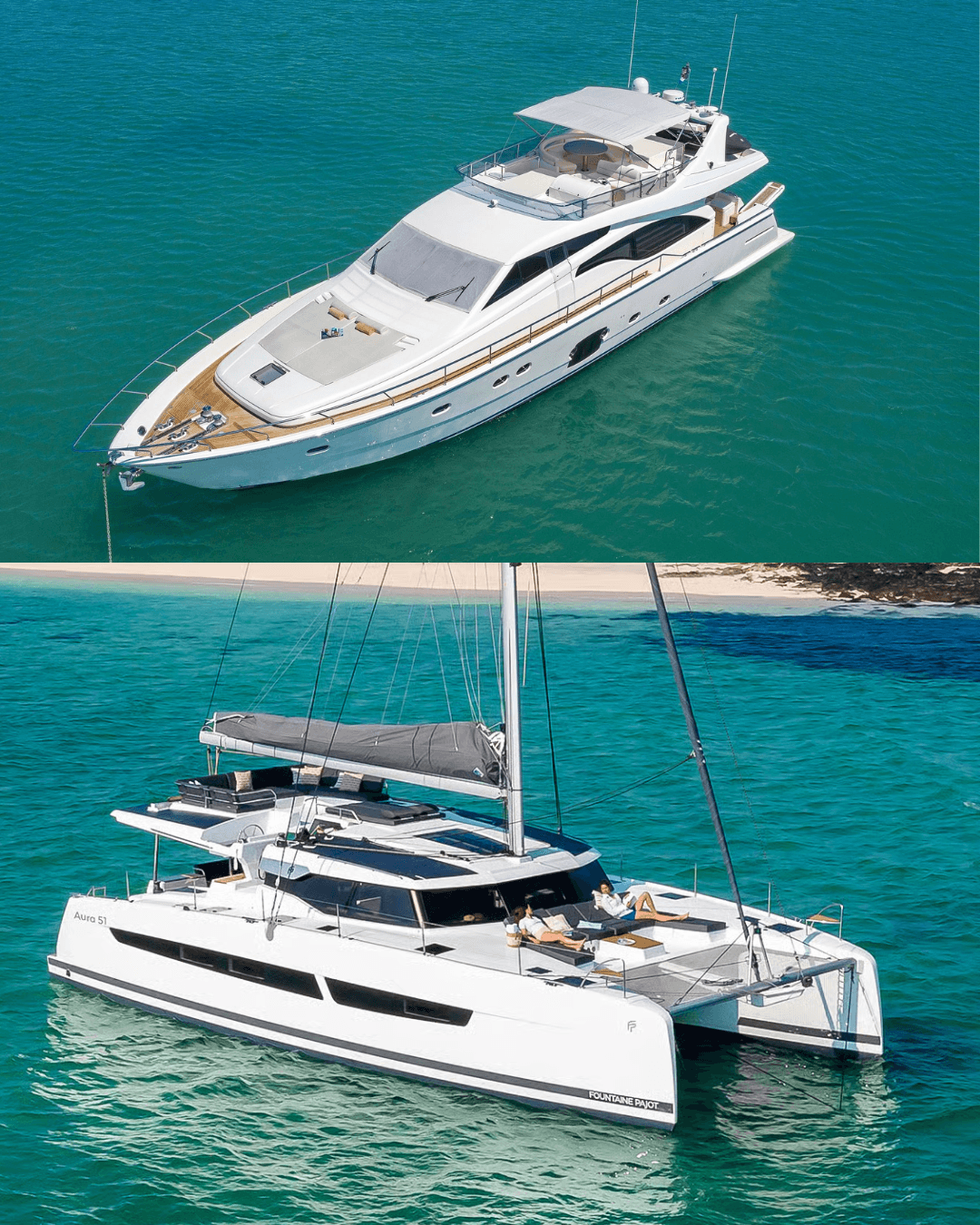
Charter yachts are based at the marina in Parikia, the island's main port, at Piso Livadi on the east coast and in the bay of Naousa in the north. Compare boats on our Paros yacht charter page, look at Naxos and Mykonos for alternative starts, or browse yacht charter in Greece as a whole. Weeks usually run Saturday to Saturday. For a bareboat charter the skipper needs a licence the charter company accepts (see our boat licence guide for Greece and the ICC); without one, hire a skipper or book a crewed yacht.
A 7-day sailing itinerary from Paros
The distances below are approximate and measured as the boat sails between harbours. Plan every leg with up-to-date charts and a pilot book, and check the forecast each morning.
Day 1: Paros to Mykonos (approx. 20–27 nm)
From Naousa it is about 20 nm north to Mykonos; from Parikia or Piso Livadi count on roughly 26–27 nm. This is the one leg that heads into the meltemi, so do it on the first day and leave early. Visiting yachts under 25 m berth at the New Port (Tourlos), where the municipal port fund takes bookings online only, and asks boats to arrive between noon and sunset. Sailing yachts are not allowed in the old port of Chora.
Tip: submit the Mykonos New Port booking as soon as you know your dates; a request is not a confirmed berth.
Day 2: Delos, then Mykonos to Naxos (approx. 21 nm)
Delos, a UNESCO World Heritage site and in myth the birthplace of Apollo, is best seen in the morning from the excursion boats that leave Mykonos. The site ticket does not include the boat, swimming at the coast of Delos is not allowed, and the site is closed in the winter months. After lunch the meltemi turns into a fair wind: Naxos town is about 21 nm due south. Stay in the tourist marina run by the Naxos municipal port fund (49 berths for boats of 8–18 m, from one night up), with water, electricity and fuel.
Tip: book your stay with the Naxos municipal port fund; the marina also serves boats for a single night.
Day 3: Naxos to Koufonisia (approx. 15 nm)
Head south-east along the Naxos coast to Koufonisia: two islands, Pano and Kato Koufonisi, separated by a channel only about 200 m wide. The harbour of Pano Koufonisi, marked by a white windmill, is part of the port zone managed by the Naxos port fund. Fine white sand and emerald water make this the swimming day of the week.
Tip: the Small Cyclades are a Natura 2000 area with seagrass meadows on the seabed; drop the anchor on clean sand.
Day 4: Koufonisia to Schinoussa and Iraklia (approx. 6 + 4 nm)
A short hop brings you to Schinoussa, whose sheltered bay of Mersini is described by the Greek National Tourism Organisation as one of the safest shelters for small boats in the Aegean, a good lunch stop or a night in unsettled weather. Continue about 4 nm to Iraklia and the harbour of Agios Georgios, a small village built like an amphitheatre around the port, with Livadi beach a short walk away.
Tip: the small harbours are also served by ferries; leave the ferry berth clear and follow the port police.
Day 5: Iraklia to Ios (approx. 11 nm)
A beam or broad reach south-west takes you to Ormos, the port of Ios, with Chora climbing the hill above it: white houses, windmills and the church of Panagia Gremiotissa at the top. Ask the port authority where visiting yachts should lie.
Tip: the ferries from Santorini and Mykonos call at Ormos too, so leave the ferry quay clear.
Day 6: Ios to Despotiko (approx. 20 nm)
This leg runs north-west, so start early: the meltemi is usually strongest around midday and in the afternoon and eases in the evening and at night. Despotiko, an uninhabited island just west of Antiparos, holds an Archaic sanctuary of Apollo under absolute archaeological protection. The Ephorate of Antiquities of the Cyclades points to the natural sheltered harbour formed between Antiparos, Despotiko and the islet of Tsimintiri, reached from the Panagia and Mandra side, as the best approach. Anchor there for the night.
Tip: visit the site on foot along the visitor path; leave everything exactly as you found it.
Day 7: Despotiko to Paros (approx. 13 nm)
Return to base: about 13 nm to Parikia or to Piso Livadi. The Antiparos strait between Paros and Antiparos is only 500–1,000 m wide and about 4.5 m deep, with small ferries shuttling the roughly one mile between Pounta and Antiparos every few minutes. Check your draft against the chart and ask at check-in whether the charter company allows the passage, or go round the west side of Antiparos.
Tip: agree the return time with your charter company when you board; the yacht must be back at base before the week ends.
| Leg | Distance | Overnight | Highlight |
|---|---|---|---|
| Paros – Mykonos | approx. 20–27 nm | Mykonos New Port (Tourlos), booked online | Mykonos town |
| Mykonos – Naxos | approx. 21 nm | Naxos tourist marina | Delos by excursion boat |
| Naxos – Koufonisia | approx. 15 nm | Pano Koufonisi harbour | White sand beaches |
| Koufonisia – Schinoussa – Iraklia | approx. 6 + 4 nm | Agios Georgios, Iraklia (or Mersini, Schinoussa) | Sheltered Mersini bay |
| Iraklia – Ios | approx. 11 nm | Ormos, Ios | Chora and Panagia Gremiotissa |
| Ios – Despotiko | approx. 20 nm | Anchorage between Antiparos, Despotiko and Tsimintiri | Sanctuary of Apollo |
| Despotiko – Paros | approx. 13 nm | Base (Parikia or Piso Livadi) | Antiparos strait |
Rules and safety in the central Cyclades
- Small Cyclades Natura 2000 area. Iraklia, Schinoussa, Koufonisia, Keros and Antikeros with their surrounding sea form the protected area GR4220013. About 10 % of its marine area is Posidonia seagrass meadow, a priority habitat, and the waters host the Mediterranean monk seal, loggerhead turtles and dolphins (NECCA). Anchor on sand, keep your distance from wildlife and take all rubbish back to port.
- Despotiko. The island is an archaeological site of absolute protection, also protected for its Cycladic vegetation (Ephorate of Antiquities of the Cyclades). Keep to the visitor path and do not remove anything.
- Delos. Visit with the excursion boats from Mykonos, not with your own yacht, and check the current timetable with the Mykonos port fund. No swimming at the coast of Delos.
- Mykonos New Port. Online booking only, arrival between noon and sunset, and no sailing yachts in the old port of Chora (Mykonos municipal port fund).
- Antiparos strait. About 4.5 m deep and 500–1,000 m wide, with constant ferry traffic between Pounta and Antiparos (Paros–Antiparos port fund).
- Ferries. Parikia connects Paros with Piraeus, Lavrio, the other Cyclades and Crete, and sees around 27 ferry calls a day in July. Keep clear of harbour entrances when a ferry is manoeuvring.
- Bathing areas. Hellenic Coast Guard port rules apply everywhere: keep 200 m from swimmers and do no more than 5 knots within 200 m of the shore. The local port authorities (Λιμεναρχείο) enforce them.
- Meltemi. The etesian winds blow from the north in the central Aegean during the warm season, strongest from mid-June to early September. They typically reach 6–7 Beaufort and in the central Aegean sometimes 8–9, peak around midday and in the afternoon, and ease in the evening and at night (National Observatory of Athens, meteo.gr). On a strong day stay put in Naousa bay, the Naxos marina, Mersini or the Despotiko anchorage.
- Licence. Without a licence you may only drive small motorboats (outboard up to 30 hp on a conventional hull, only 15 hp on a RIB, V-hull or multihull). For a bareboat charter the skipper needs a recognised licence, the ICC being the safest choice, and the charter company checks it. With a hired skipper nobody on board needs one. Details in our boat licence guide for Greece.
Best time to sail Paros and Naxos
The sailing season runs roughly from May to October. The meltemi blows during the warm season and is strongest from mid-June to early September, with the windiest days most often in July and August, so those weeks suit experienced crews or a hired skipper. May, June, late September and October fall outside the meltemi peak and usually bring lighter winds. Check the forecast daily and build a spare day into the plan.
FAQ
Can I sail from Paros to Delos with my own charter yacht?
Plan to see Delos with the excursion boats from Mykonos. The island is an open-air archaeological site, swimming at its coast is not allowed, and the site ticket is sold separately from the boat trip.
Is the Antiparos strait passable for a charter yacht?
It is about 4.5 m deep and 500–1,000 m wide, with ferries crossing constantly. Check your draft on the chart and ask the charter company; going round the west side of Antiparos is the alternative.
What if the meltemi is too strong for the next leg?
Stay in port or at a sheltered anchorage and sail early the next morning, when the wind is usually lighter. The loop is short enough to drop a stop.
Do I need to book berths in advance?
At Mykonos New Port, yes: berths are booked online only. The Naxos marina has 49 berths managed by the municipal port fund; in the small harbours, arrive early in the afternoon in high season.
How do I get to Paros?
By ferry from Piraeus or Lavrio, or by plane: the flight from Athens to Paros takes about 45 minutes.
More sailing guides
Want to start closer to Athens? See the Cyclades sailing week from Lavrion or the gentler Saronic Gulf week from Athens. Before you fly, go through our packing list for a yacht charter.