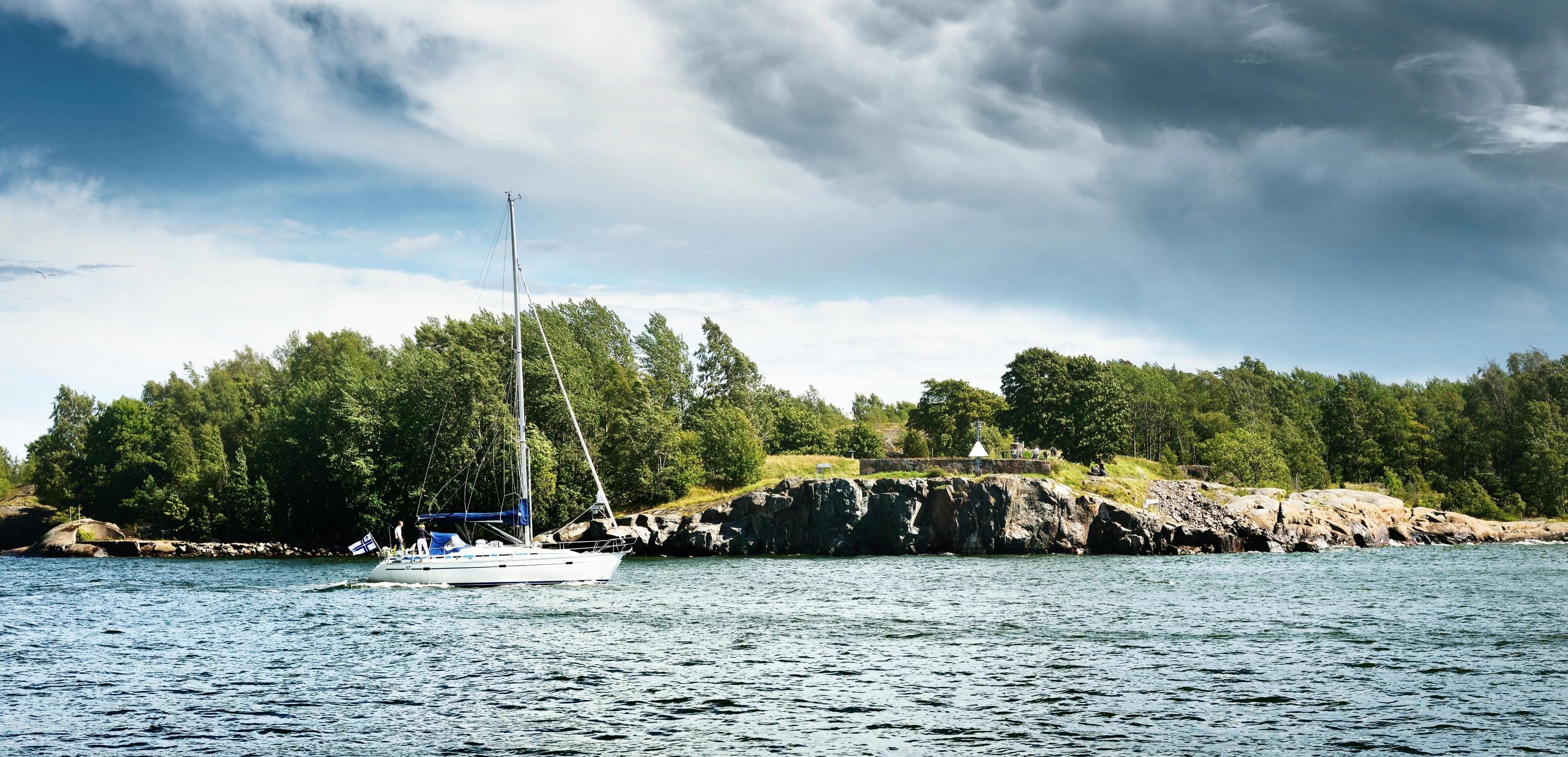
Sailing the Costa Brava: Palamós, Roses and Cap de Creus
Sailing the Costa Brava means rocky headlands, fishing villages and two protected marine areas, the Medes Islands and Cap de Creus, a short day's sail apart. A week from Palamós or Roses covers roughly 90 to 110 nautical miles in short legs: the Palafrugell coves, the Medes, the bay of Roses, Cadaqués and the rounding of Cap de Creus, with France within reach. The plan is set by one thing: the tramuntana, the strong north wind.
Where to charter a yacht for the Costa Brava?
The two natural bases are Palamós in the south and Roses in the north of the area. You can charter a yacht in Palamós or rent a sailing yacht in Roses, or compare all bases on our yacht charter in Spain page; charter yachts from local bases can be booked on Ship O'Hoi, bareboat or with a skipper. Charter weeks usually run Saturday to Saturday. To sail bareboat you need a licence the charter company accepts, see our guides to the boat licence in Spain and the ICC; otherwise hire a skipper or choose a crewed yacht.
A 7-day sailing itinerary from Palamós
This loop starts and ends in Palamós and goes north with the fair-weather days, so that you are back on the more sheltered southern side if the tramuntana sets in. From Roses you sail the same stops in a different order (see the variant below). Distances are approximate, estimated from the chart; plan every leg with up-to-date charts and a pilot book.
Day 1: Palamós to L'Estartit via Calella, Llafranc and Tamariu (approx. 15 nm)
Leave Palamós (Port Marina Palamós alone has around 900 berths and 10 m of water at the entrance) and follow the coast north. Calella de Palafrugell is an old fishing village spread over several coves, with the arches of Les Voltes and the Port Bo beach; Llafranc is about a kilometre further north and Tamariu a few kilometres beyond, all linked by the camí de ronda coastal path. Stop for a swim at anchor on sand, then pass Aiguablava and Cap de Begur and continue to L'Estartit for the night. L'Estartit has more than 900 berths for boats of 6 to 20 m.
Tip: Aiguablava's small harbour takes only boats up to 6 m with 1.5 m of water inside, so treat it as a lunch stop at anchor, not an overnight harbour.
Day 2: The Medes Islands and across the bay to Roses (approx. 13 nm)
The Medes lie about a mile off L'Estartit and form a partial natural reserve where taking anything from the sea is prohibited. In the strictly protected zone around the islands you may not anchor, only tie up at designated moorings, keep to 3 knots and visit between sunrise and sunset. Snorkel from the boat or take the dinghy, then cross the bay of Roses to Port de Roses (about 560 berths, 6 to 20 m) for the night.
Tip: check the current mooring rules with the park office in L'Estartit before you go; along the whole Montgrí coast the park asks you to use buoys rather than anchors to protect posidonia seagrass.
Day 3: Roses to Cadaqués via Montjoi and Jóncols (approx. 8 nm)
East of Roses you enter the Cap de Creus Natural Park. The coves of Montjoi, La Pelosa and Jóncols have buoy fields run by Roses town council, with a fee; anchoring inside a buoy field is not allowed. Round Cap Norfeu, a partial marine reserve, and enter the bay of Cadaqués. Cadaqués has no marina: the town council licenses private operators to run its buoy fields, so arrange a buoy in advance, or anchor clear of seagrass where the park rules allow.
Tip: the Salvador Dalí House in Portlligat, just north of Cadaqués, can only be visited with a pre-booked time slot.
Day 4: Around Cap de Creus to Port de la Selva (approx. 9 nm)
This is the leg the week is built around. Wait for a calm forecast, then round Cap de Creus, the headland whose rocks and plants are shaped by the tramuntana. Keep out of the S'Encalladora integral reserve, where navigation is prohibited, and respect the speed limits: 5 knots within 300 m of the coast. Tie up in Port de la Selva (around 870 berths, boats up to 15 m).
Tip: Cala Murtra, Cala Jugadora and Cala Galladera are no-anchoring sectors once their marker buoys are in place; look for the buoys before you drop the hook.
Day 5: Optional crossing to France, Port-Vendres (approx. 12 nm)
With settled weather, sail north past Cap de Cerbère and Banyuls-sur-Mer to Port-Vendres, where the harbour has 30 visitor berths out of 267. French rules apply once you cross the border, so read our guide to the boat licence in France and confirm with your charter company that the yacht may leave Spanish waters. If you prefer to stay in Spain, spend the day in the coves west of Port de la Selva and sleep there again.
Tip: with only 30 visitor berths, call the Port-Vendres harbour office before you set off.
Day 6: Port-Vendres back to Roses (approx. 26 nm, or 17 nm from Port de la Selva)
The longest day: round Cap de Creus southbound, past Cadaqués and Cap Norfeu, into the bay of Roses. Start early and check the forecast for the cape before you leave. Overnight in Port de Roses, or on a council buoy in Montjoi or Jóncols if you have booked one.
Tip: if a tramuntana is forecast for the next days, make this the day you head south; the port authority lists the tramuntana among the main winds for Roses, L'Estartit and Port de la Selva, but not for Palamós.
Day 7: Roses to Palamós (approx. 24 nm)
Cross the bay of Roses, pass outside the Medes and round Cap de Begur back to Palamós, with a last swim stop off Tamariu or Calella if time allows. Refuel and return the yacht at the time your charter company sets.
Tip: in a northerly this is a downwind run across open water; reef early.
Variant from Roses: sail days 3 to 6 first (Cadaqués, Cap de Creus, Port de la Selva, France), then turn south to L'Estartit and the Medes, Calella and Palamós, and come back north across the bay on the last day.
| Leg | Distance | Overnight | Highlight |
|---|---|---|---|
| Palamós – L'Estartit | approx. 15 nm | Port de l'Estartit | Calella, Llafranc, Tamariu coves |
| L'Estartit – Medes – Roses | approx. 13 nm | Port de Roses | Medes Islands marine reserve |
| Roses – Cadaqués | approx. 8 nm | Cadaqués buoy field (book) or anchor off seagrass | Montjoi, Jóncols, Cap Norfeu |
| Cadaqués – Port de la Selva | approx. 9 nm | Port de la Selva | Rounding Cap de Creus |
| Port de la Selva – Port-Vendres | approx. 12 nm | Port-Vendres visitor berth | Crossing to France |
| Port-Vendres – Roses | approx. 26 nm | Port de Roses | Cap de Creus southbound |
| Roses – Palamós | approx. 24 nm | Palamós (base) | Bay of Roses and Cap de Begur |
Rules and safety on the Costa Brava
- Medes Islands: part of the Parc Natural del Montgrí, les Illes Medes i el Baix Ter. In the strictly protected zone: no anchoring, moor only at designated moorings, maximum 3 knots, visits only from sunrise to sunset, no fishing and no discharges of any kind. The rules are in the park's responsible navigation leaflet.
- Cap de Creus Natural Park: under the park's use and management plan, free anchoring is allowed except inside buoy fields, in no-anchoring sectors and over posidonia or Cymodocea seagrass. You may spend at most two consecutive nights at anchor or on a buoy, and never overnight in the partial reserves of Cap Gros, Cap de Creus and Cap Norfeu, where navigation at night is only allowed in direct transit. S'Encalladora is closed to all boats. Speed limits: 12 knots in general, 5 knots within 300 m and 3 knots within 50 m of the coast. Motor-powered visiting boats from outside the park's own harbours must notify the park of their visit. Details: Cap de Creus marine rules.
- Seagrass: use the Generalitat's map of seagrass meadows to find sand before you anchor.
- Tramuntana: the north wind accelerates around the eastern end of the Pyrenees and out of the Gulf of Lion, and AEMET research places a sharp wind boundary roughly on the line of Cap de Creus. The Catalan wind-risk plan counts the high ground north of Cap de Creus and the north of Alt Empordà among the windiest places in Catalonia. Check the AEMET coastal forecast for Girona waters every morning and do not round the cape into a tramuntana.
- Emergencies: VHF channel 16 or phone 112 reach the maritime rescue services.
- Licence: from 1 October 2026 everyone driving a rented boat in Spain needs a licence; the old licence-free rental of small boats has ended. For a bareboat yacht you need a licence that covers its size and sailing area and that Spain recognises; the ICC is the safe choice. With a skipper or crew you need none. See our boat licence in Spain guide.
Best time to sail the Costa Brava
The charter season here runs roughly from May to October. The Catalan wind-risk plan notes that the strong north and northwest wind situations are most frequent from late autumn to early spring, so summer is generally the easier time to round Cap de Creus; still check the forecast daily and keep a spare day in the plan. In July and August, book Cadaqués buoys, Port-Vendres berths and the Dalí House ahead.
FAQ
Can I anchor at the Medes Islands?
No. Anchoring is prohibited in the strictly protected zone; you may only tie up at designated moorings, between sunrise and sunset.
Do I need a permit to sail in Cap de Creus Natural Park?
No permit is needed to sail through, but motor-powered visiting boats must notify the park of their visit, and anchoring, overnight stays and speed are regulated. Recreational fishing needs a separate park permit.
Is there a marina in Cadaqués?
No. Visiting yachts use the buoy fields licensed by the town council or anchor clear of seagrass; Roses and Port de la Selva are the nearest harbours.
What should I do if the tramuntana is forecast?
Stay south of Cap de Creus, or in harbour until it has passed. Plan the northern part of the week, and the rounding of the cape, for the days when the forecast is settled.
Can I sail to France from the Costa Brava?
Yes, Port-Vendres is about 12 nm from Port de la Selva. Check with your charter company that the yacht may leave Spain and that your licence is valid in France.
More sailing guides for Spain
Planning another area? Read our guides to sailing from Barcelona along the Garraf coast and a Mallorca sailing week from Palma to Cabrera.