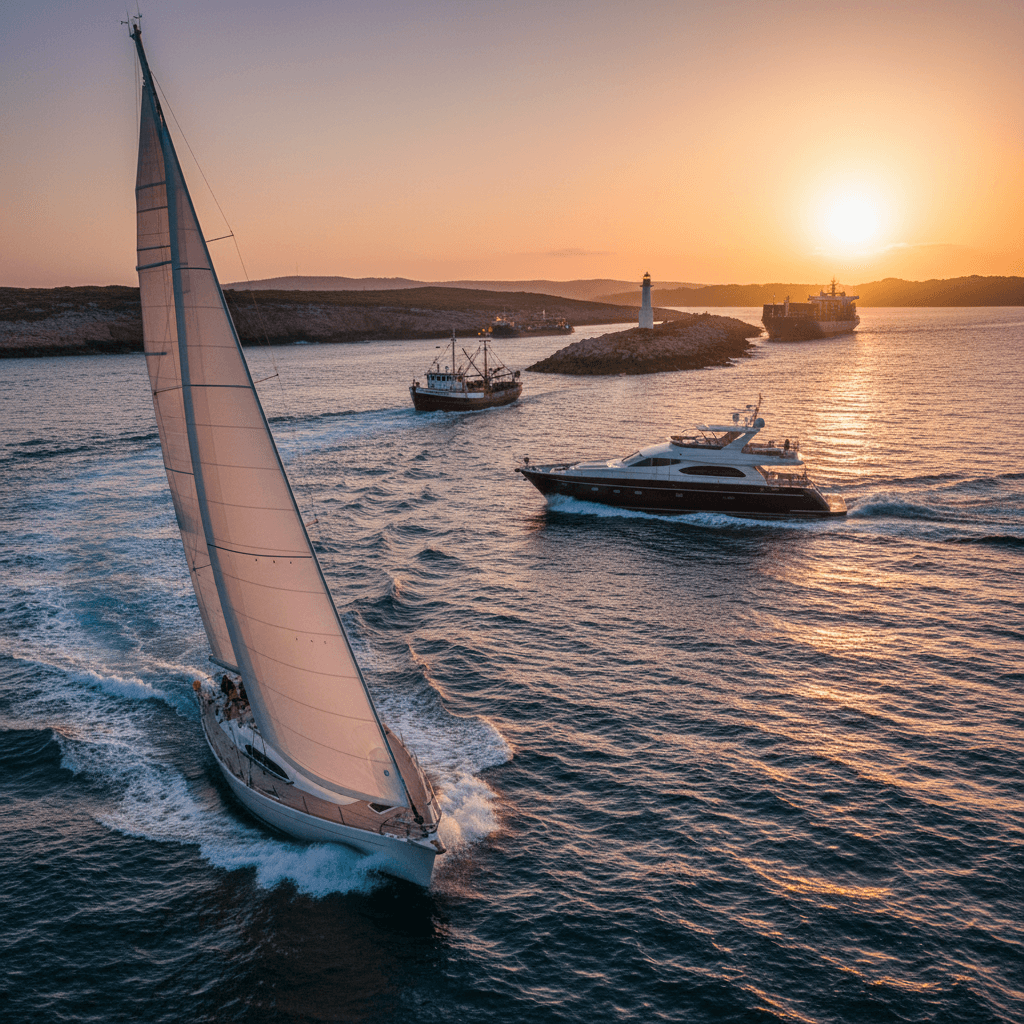
Barcelona and the Garraf coast by boat: a 7-day guide
Sailing from Barcelona takes you from the middle of a big city to limestone cliffs in a couple of hours. The legs are short: approx. 14 nm to Port Ginesta at the foot of the Garraf massif, then a few miles each to Garraf village, Sitges and Vilanova i la Geltrú. North of the city, the Maresme coast has a string of marinas as far as Arenys de Mar. Expect a week of harbour-hopping rather than anchoring.
Where to charter a yacht for Barcelona and the Garraf coast?
Charter yachts sail from the marinas of Barcelona itself, such as Port Vell, Port Olímpic and Port Fòrum, and from Sitges at the southern end of the Garraf. Compare charter yachts in Barcelona and boats in Sitges, or see every region on the Spain page. You can book on Ship O'Hoi, bareboat or with a skipper. Charter weeks usually run Saturday to Saturday. To sail bareboat, the skipper needs a licence that the charter company accepts. Read our guides to the boat licence in Spain and the ICC certificate. If nobody in your crew has one, hire a skipper or book a crewed yacht.
A 7-day sailing itinerary from Barcelona
Distances are measured from Port Vell (add about 2 nm from Port Fòrum) and are rough chart estimates. Plan each day with charts, a pilot book and the morning forecast. This coast has few sheltered anchorages, so every night below is in a marina. Call ahead for a visitor berth, especially at weekends.
Day 1: Check-in and a skyline sail
Approx. 5–8 nm round trip. After check-in, take a shakedown sail along the city beaches and look back at Montjuïc and the waterfront. Leisure boats use only the northern part of the port and its north mouth. Overnight in your base marina. Tip: keep a listening watch on the port's VHF working channel in port waters. The ordinance names channel 14 as the main one; ask your marina to confirm.
Day 2: Barcelona to Port Ginesta
Approx. 14 nm. Head south-west past the Llobregat delta and the airport. The flat shore gives way to the Garraf massif, a natural park of about 12,400 hectares made of limestone and dolomite, where cliffs and steep rocky slopes drop to the sea. Overnight in Port Ginesta, which Sitges Tourism calls the largest marina in Catalonia. It lies roughly 10 km from Barcelona airport, handy for a crew change. Tip: keep outside the 200 m strip off the Castelldefels beaches (see Rules below).
Day 3: Port Ginesta to Garraf and Sitges
Approx. 1 nm to Garraf, then approx. 4 nm on to Sitges. Garraf village is just around the corner. The row of 33 old huts on the beach, built for fishermen and railway workers, is its trademark, with the Serra de Coma Roja behind it. The small Port de Garraf lies right at the foot of the natural park and has a yacht club and a water sports centre. Stop for lunch, then carry on to Port de Sitges-Aiguadolç, which rents berths by the day and answers on VHF channel 6. Tip: the town centre is about a 10-minute walk away. Head for La Punta, where the parish church of Sant Bartomeu i Santa Tecla stands above the sea.
Day 4: Sitges to Vilanova i la Geltrú
Approx. 5 nm. This short hop leaves time for a morning swim off one of Sitges' 21 beaches, but anchor only in calm weather and never inside a buoyed swimming zone. Vilanova is a working town with a large marina, a fishing port and more than 6 km of sandy beaches. Overnight in the marina, where the yacht club and Vilanova Grand Marina share the harbour. Tip: the Catalan Railway Museum fills the old steam locomotive depot with more than fifty vehicles, and the Far de Sant Cristòfol lighthouse houses the town's sea museum.
Day 5: Vilanova i la Geltrú to Port Olímpic
Approx. 24 nm, the longest leg of the week. The south-westerly sea breeze helps on the way back north. Sail the Garraf coast again, further offshore, and pass outside the commercial port, keeping well clear of the south entrance, which is for ships. Overnight in Port Olímpic, which takes boats of 7 to 30 m and rents berths by the day. Tip: to reach a beach by tender, use the marked channels.
Day 6: Port Olímpic to El Masnou, Port Balís and Arenys de Mar
Approx. 7 nm to El Masnou, approx. 10 nm on to Port Balís, then approx. 2 nm to Arenys de Mar. The Maresme coast north of Barcelona is a straight line of beaches, towns and marinas. Port del Masnou makes a good lunch stop. Port Balís, at Sant Andreu de Llavaneres, has a 24-hour fuel station and answers on VHF channel 6. Overnight in Balís or in Arenys de Mar, where the yacht club's marina sits beside a working fishing harbour. Tip: the fishing harbour in Arenys has an educational route for visitors.
Day 7: Arenys de Mar back to Barcelona
Approx. 20 nm. Sail back along the Maresme with a last swim stop if the sea is calm. Most yachts must be back at base on Friday evening for Saturday check-out, so allow time to refuel.
| Leg | Distance | Overnight | Highlight |
|---|---|---|---|
| Base – city waterfront – base | approx. 5–8 nm | Base marina | Barcelona skyline from the sea |
| Barcelona – Port Ginesta | approx. 14 nm | Port Ginesta | First Garraf cliffs |
| Ginesta – Garraf – Sitges | approx. 1 + 4 nm | Port de Sitges-Aiguadolç | Garraf huts, La Punta church |
| Sitges – Vilanova i la Geltrú | approx. 5 nm | Vilanova marina | Railway museum, lighthouse |
| Vilanova – Port Olímpic | approx. 24 nm | Port Olímpic | Whole Garraf coast under sail |
| Port Olímpic – Masnou – Balís – Arenys | approx. 7 + 10 + 2 nm | Port Balís or Arenys de Mar | Maresme marinas, fishing harbour |
| Arenys de Mar – Barcelona | approx. 20 nm | Base marina | Last swim, fuel, check-out |
Option: crossing to Mallorca
Barcelona to the Balearics is a real offshore passage: approx. 100 nm to Port de Pollença in the north of Mallorca and approx. 110 nm to Palma. At 6 knots that is 17–19 hours, so most crews sail overnight with a watch system. Before you plan it, ask the charter company whether the crossing is allowed on your contract and whether it offers one-way drop-offs. Check that your licence covers the distance offshore. Wait for a settled weather window, and do not set out with a llevant (easterly) forecast. When you arrive, the Balearic posidonia anchoring rules apply, so read our guide to anchoring in the Balearics. For the week that follows, see our Mallorca itinerary from Palma.
Rules and safety around Barcelona and the Garraf
- Port of Barcelona: under the port's traffic ordinance (BOE-A-2023-6719), leisure boats may only use the northern area of the port, north of the Porta d'Europa bridge. They may use the southern area only in an emergency. The speed limit inside is 6 knots, or 8 knots in the north mouth and south entrance channels. Small boats must not obstruct ships in narrow channels, must keep 15 m from moored or anchored ships, and may not anchor or fish in the port. Expect ferries and cruise ships near the entrances.
- Beach zones: the national coastal regulations (Reglamento General de Costas, art. 73) ban sail and motor boats from buoyed swimming zones. Boats may only reach or leave the beach through marked channels. Where there are no buoys, the swimming zone is a 200 m strip off beaches and 50 m off the rest of the coast. Inside it the speed limit is 3 knots. Discharging anything from boats is prohibited.
- Garraf natural park: a land park; we found no special rules for navigating off it. The beach-zone rules apply, and the cliffs give no shelter from onshore wind.
- Winds: Meteocat describes the summer sea breeze (marinada, often called garbí) as a south-westerly on much of the Catalan coast. The llevant is a warm, humid easterly from the sea. According to the Generalitat it starts to blow from mid-September and can bring heavy rain and an easterly gale (temporal de llevant) to the coast. Ports de la Generalitat lists levante and garbí as prevailing at Arenys de Mar. Check the AEMET marine forecast for the Catalan coast and the Meteocat beach forecast every morning.
- Emergencies: call Salvamento Marítimo on VHF channel 16, on 900 202 202 or on 112.
- Licence: from 1 October 2026, anyone driving a rented boat in Spain needs a licence, because the old licence-free rental of small boats has ended. To sail a yacht bareboat you need a licence that covers its size and area and that Spain recognises. The ICC is the safe choice. With a skipper or crew you need none. See our boat licence in Spain guide.
Best time to sail Barcelona and the Garraf
Summer on the Garraf coast is hot with little rain, and on good days a sea breeze fills in from the south-west. That daily breeze makes for easy afternoon sailing on the short legs. From mid-September the llevant can bring rain and easterly storms onto this open coast. In autumn, keep a plan B harbour within reach and follow the AEMET forecast closely. Because every night is in a marina, the area also works outside midsummer when the forecast allows.
FAQ
Can I anchor overnight along the Garraf coast?
The Garraf coast is mostly cliffs with few sheltered bays, and we found no official anchorage off it. Plan your nights in the marinas at Port Ginesta, Garraf, Sitges and Vilanova, and keep swim stops for calm days.
Which marinas are there in Barcelona?
Port Vell, with Marina Vela, Marina Port Vell and the city's historic yacht clubs; Port Olímpic further east; and Port Fòrum at Sant Adrià de Besòs, about 15 minutes from the centre.
How far is Sitges from Barcelona by boat?
About 19 nm from Port Olímpic to Port de Sitges-Aiguadolç, a comfortable half-day sail. You can also break the trip at Port Ginesta, approx. 14 nm from Barcelona.
Can I sail from Barcelona to Mallorca in a charter yacht?
It is approx. 100–110 nm, usually an overnight passage. Check with the charter company first whether an open-sea passage and a one-way drop-off are allowed on your contract, and consider taking a skipper.
For more, see our guide to sailing the Costa Brava from Palamós and Roses, just north of the Maresme, or our Mallorca week from Palma.