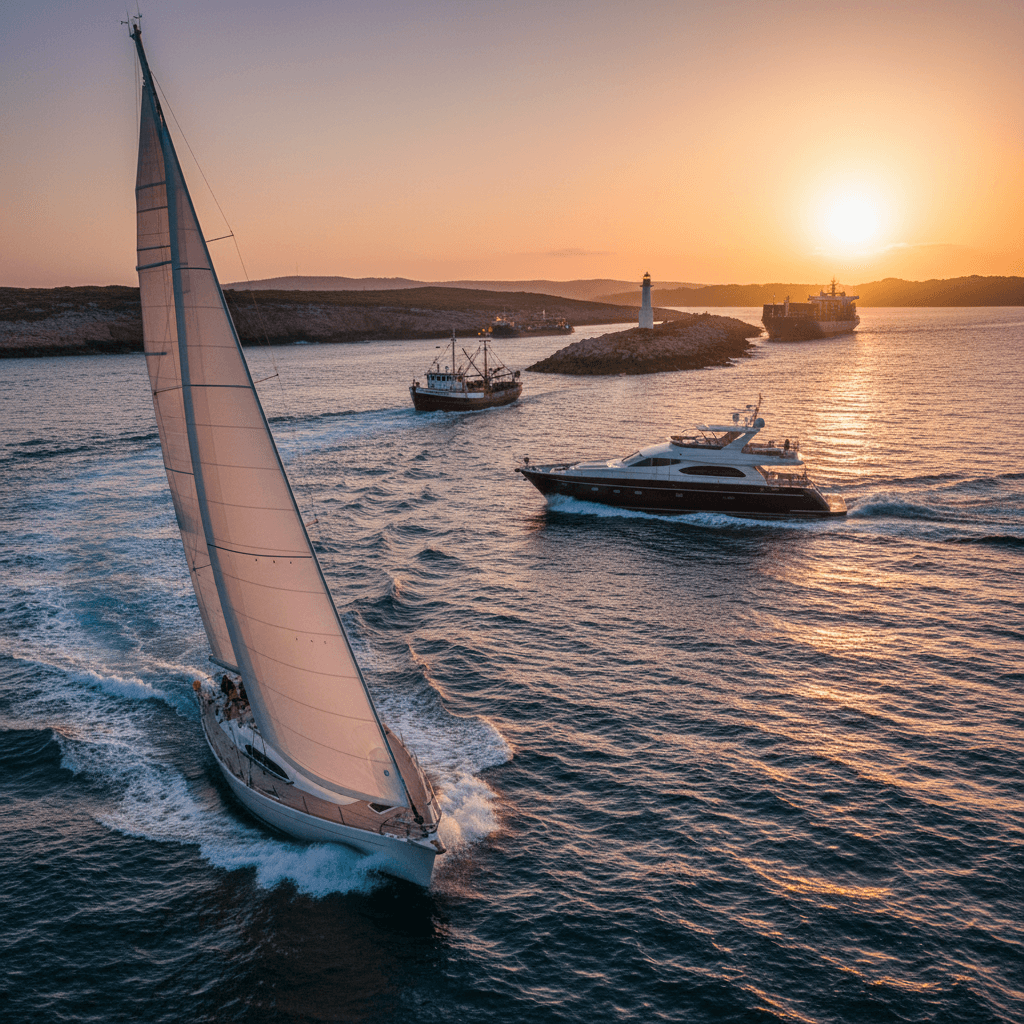
Sailing from Trogir: Šolta, Vis and the Blue Cave
A week of sailing from Trogir takes you from a UNESCO-listed old town to the outermost islands of central Dalmatia. The first days are short hops through sheltered water to the Drvenik islands and Šolta, with a harbour or a quiet bay every few miles. Then comes the highlight: an open crossing of about 20 nautical miles to Vis, the fishing town of Komiža and Biševo's Blue Cave, before you sail back along Šolta to Trogir.
Where to charter a yacht for Trogir, Šolta and Vis?
Most yachts for this route start at ACI Marina Trogir on Čiovo, opposite the old town, or at Marina Baotić in Seget Donji, about 2 km west of Trogir. Boats from both bases are on our yacht charter Trogir page. There are more on Šolta and all over the country on the Croatia page. Charter weeks usually run Saturday to Saturday. To skipper a bareboat yacht you need a licence the charter company accepts (see boat licence in Croatia and the ICC), or you can hire a skipper or book a crewed yacht.
A 7-day sailing itinerary from Trogir
The distances are rough estimates from the chart. Plan every leg with up-to-date charts and a pilot book.
Day 1: Trogir to Drvenik Veliki (approx. 8 nm)
Trogir's historic centre has been on the UNESCO World Heritage List since 1997, and you get the classic view of its waterfront as you sail out past Čiovo. The Trogir tourist board puts Drvenik Veliki about 8 nm away. The island's only village has a marina, and there are anchorages in the bays of Grabule and Solinska on the south side.
Tip: the bridge between Trogir and Čiovo has only 2.8 m clearance, so a sailing yacht leaving ACI Marina Trogir goes out to the west, between Čiovo and the Čelica rock.
Day 2: Drvenik Veliki to Maslinica, Šolta (approx. 5 nm)
Spend the morning swimming at Krknjaši, the islets off Drvenik Veliki known as the Blue Lagoon, which have a few fish restaurants on the beach. Then cross to Maslinica, the only village and harbour on Šolta's west coast. It sits behind seven islets and grew up around an 18th-century castle. The marina has more than 50 berths and is open all year. The tourist board describes the neighbouring Šešula bay as a natural, safe anchorage.
Tip: walk up to St Nicholas church above the bay at sunset for the view towards Trogir and Drvenik.
Day 3: Maslinica to Vis town (approx. 20 nm)
This is the open crossing, with little shelter between Šolta and Vis, so pick a settled forecast and leave in the morning. Vis town has no marina. Yachts moor on the two town quays, Luka and Kut, which have room for around a hundred boats, or in the harbour anchorage right in front of them. The quays have laid mooring lines, water and electricity, and you pay at the reception. The berths are exposed to north and north-east winds, and Kut is also open to the north-west.
Tip: ferries and catamarans from Split call daily and throw a big wake, so keep a good distance between your stern and the quay.
Day 4: Vis town to Komiža (approx. 12 nm)
Sail round the north-west of Vis to Komiža, the fishing town facing Biševo. Vis feels unspoilt partly because it was a military zone from the end of the Second World War until 1989. The archipelago is now a UNESCO-listed geopark, and its visitor centre is in Komiža. Berths in Komiža are limited in high season, so check the current arrangements and keep Vis town as your plan B.
Tip: stock up here, because tomorrow is a long day with two cave stops.
Day 5: Komiža to Biševo, Ravnik and Vis town (approx. 21 nm)
Leave early. The Blue Cave (Modra špilja) lies in Balun cove on the east side of Biševo, about 4.5 nm from Komiža. You cannot take your yacht or tender inside. Visits are run only by the concessionaire, whose small boats leave from nearby Mezuporat bay, where you buy your ticket at the reception. The boat trip takes about 20 minutes, and the light is usually best between 10:00 and 14:00. Afterwards, sail east along the south coast of Vis to the islet of Ravnik near Rukavac. Its Green Cave (Zelena špilja) is open from 09:00 to 17:00. Then round the east end of Vis back to Vis town.
Tip: check the Blue Cave's live queue before leaving Komiža.
Day 6: Vis town to Stomorska or Nečujam, Šolta (approx. 20–22 nm)
Cross back to Šolta's north-east coast. Stomorska, the island's oldest coastal village, has a mooring quay with a reception, toilets, showers, and water and electricity for a fee. For a night at anchor, choose Nečujam, the largest bay on Šolta, which is split into eight coves lined with beaches and pine woods.
Tip: if the south-easterly jugo is forecast, cross early before it builds.
Day 7: Šolta to Trogir (approx. 10–12 nm)
Sail across to Čiovo and round its western tip to Trogir, with time for a last swim before you refuel and hand the yacht back. Ask your charter company what time the boat must be back.
Tip: the speed limit is 8 knots within 300 m of the coast and on port approaches, so slow down early in the Trogir channel.
| Leg | Distance | Overnight | Highlight |
|---|---|---|---|
| Trogir to Drvenik Veliki | approx. 8 nm | Village marina or Grabule/Solinska bays | Trogir old town from the sea |
| Drvenik Veliki to Maslinica | approx. 5 nm | Maslinica marina or Šešula bay | Krknjaši "Blue Lagoon" |
| Maslinica to Vis town | approx. 20 nm | Vis town quays (Luka, Kut) or harbour anchorage | Open crossing to Vis |
| Vis town to Komiža | approx. 12 nm | Komiža, with Vis town as plan B | Fishing town, geopark |
| Komiža to Biševo, Ravnik and Vis town | approx. 21 nm | Vis town | Blue Cave and Green Cave |
| Vis town to Stomorska or Nečujam | approx. 20–22 nm | Stomorska quay or Nečujam bay | Šolta's north coast |
| Šolta to Trogir | approx. 10–12 nm | Charter base | Last swim, handover |
Rules and safety around Trogir, Šolta and Vis
- Blue Cave: the cave has been protected as a natural monument since 1951. In the Blue Cave and the nearby Bear Cave you may not drive, anchor or moor a boat. Swimming and diving in the Blue Cave, lights, fishing and littering are also banned. Visits are only possible with the concessionaire and a ticket, and nature wardens from the public institution More i krš can issue fines (official rules).
- Green Cave: protected as a natural monument since 1967. Private boats may go in only without engine power, swimming is allowed and you may stay 10 minutes. Tickets are sold in front of the cave (Gradina Vis).
- Distance from the coast and speed: boats under 15 m must stay at least 50 m from the coast (15–30 m: 150 m, 30 m or longer: 300 m), except when entering or leaving port, anchoring or mooring. Boats under 15 m must also stay 50 m from the rope line of a marked bathing area. The speed limit is 8 knots within 300 m of the coast, in narrow channels and on port approaches (navigation safety ordinance).
- Tourist tax and certificates: guests on a charter yacht pay tourist tax per night, and the provider collects it with the charter (Tourist Tax Act). The Ministry of the Sea lists the recognised boating certificates (mmpi.gov.hr).
- Licence: in Croatia you need a recognised licence to drive any rented motorboat or to skipper a bareboat yacht, however small the engine. For bareboat you also need a VHF radio certificate. An ICC valid for coastal waters is accepted, and with a hired skipper you need neither.
- Winds: the Croatian weather service DHMZ describes the jugo as a steady, strong south-easterly that is more frequent in the middle and southern Adriatic and blows hardest in the channels. The bura (bora) is a gusty north-easterly, weaker here than in the north, but it is known at Kliška vrata above Split. Both are more common in the cold half of the year. In settled summer weather DHMZ describes north-westerlies over the open sea, moderate in the middle Adriatic, plus a daytime sea breeze. This is the wind sailors call the maestral. Check the DHMZ Adriatic forecast before every crossing.
Best time to sail from Trogir
The season runs roughly from April to October. The Blue Cave, for example, sells tickets from 1 April to 31 October. July and August are the busiest months, when the ferries to Vis run most often. In spring and autumn it is quieter, but DHMZ notes that bura and jugo are more frequent in the cold part of the year, and April often brings about ten days of cold northerly wind. May, June and September usually give the best balance of wind, harbour space and cave light. Check the official sites for current opening times.
FAQ
How long is the crossing from Šolta to Vis?
About 20 nm from Maslinica to Vis town, most of it on open water. Go in settled weather and check the DHMZ forecast for jugo or bura first.
Can I take my yacht or dinghy into the Blue Cave?
No. You may not enter, anchor or moor in the protected cave area. You visit on the concessionaire's small boats from Mezuporat bay, and swimming in the cave is not allowed.
Is there a marina in Vis town?
No. Yachts moor on the town quays at Luka and Kut, which have mooring lines, water and electricity, or anchor in the harbour anchorage.
How is the Green Cave different from the Blue Cave?
The Blue Cave on Biševo glows silver-blue when the morning sun reflects off its sandy floor. The Green Cave on Ravnik has two large entrances and a hole in its roof that sends a beam of sunlight down to the seabed. There, private boats may enter without engine power and swimming is allowed.
More sailing guides for central Dalmatia
For the islands further east, see sailing from Split to Hvar and Brač. For a week with national parks, read the Šibenik archipelago and Krka. And before you go, check what to bring on a yacht charter.