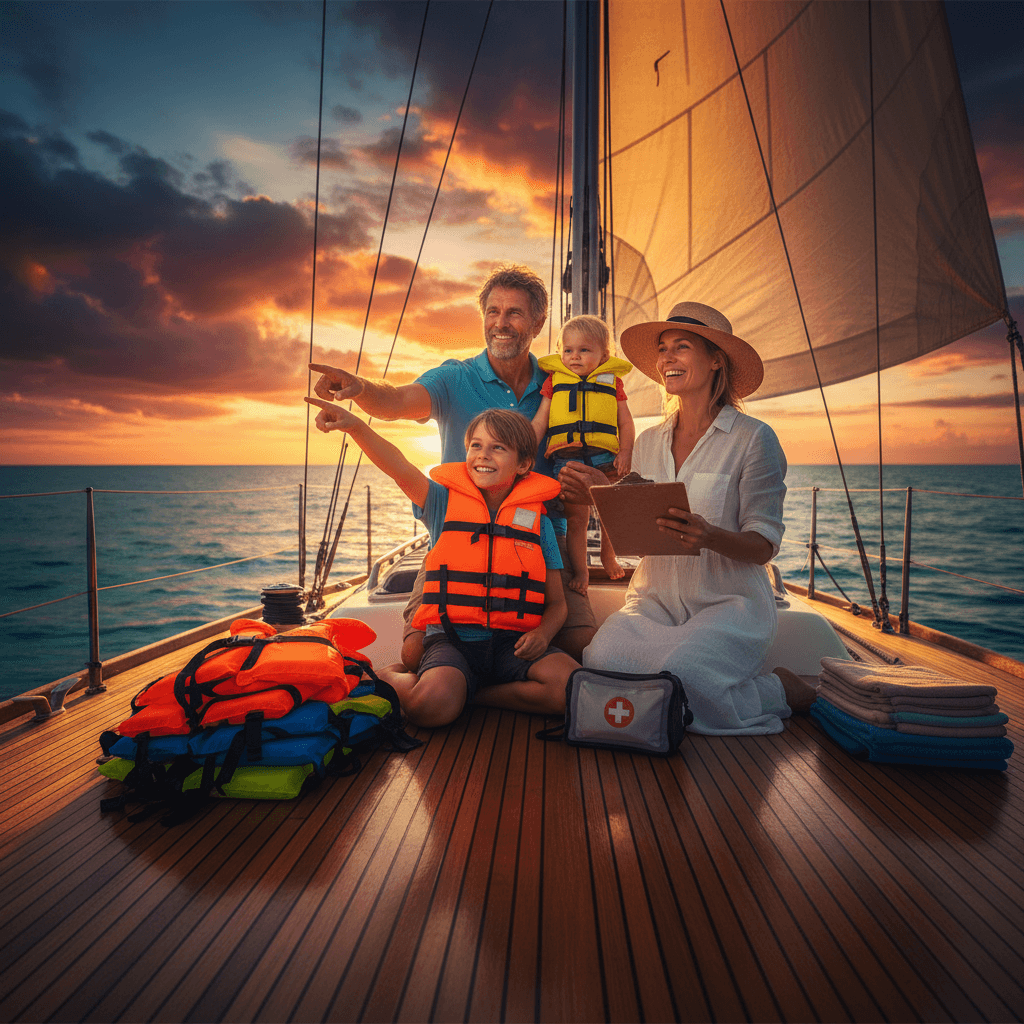
Children on Board: Rules, Flotation Equipment, and a Pre-Departure Checklist
Children on Board: Rules, Flotation Equipment, and a Pre-Departure Checklist
Taking your children out on the water is one of the finest things you can do as a parent in Norway. Warm rocks to swim from, fishing from the boat, and exploring new coves – these are childhood memories that last a lifetime. But with children on board comes an extra responsibility for safety. Here is everything you need to know.
Life Jacket Rules for Children
In Norway, it is legally required for children under 16 years to wear a life jacket in open boats under 8 meters. The rule applies:
- To all children under 16 years
- In all open boats (without a cabin) under 8 meters
- At all times when the boat is in motion
For larger boats with a cabin (such as cabin cruisers), the requirement does not apply while below deck, but life jackets are strongly recommended for children when they are in the cockpit or on deck.
Adults do not have a legal life jacket requirement, but all maritime safety organizations in Norway strongly recommend that everyone wear a life jacket – always. Be a good role model for your children.
Choosing the Right Life Jacket for Children
Not all life jackets are created equal. For children, choosing the right one is essential:
Infants (0–2 years, under 15 kg)
- Use a specially designed infant vest with a collar that turns the child onto their back in the water
- The vest should have a crotch strap
- Buoyancy: at least 30 Newton
Toddlers (2–6 years, 15–30 kg)
- Vest with collar and crotch strap
- Buoyancy: at least 50 Newton
- Should keep the child face-up in the water
Children (6–16 years, 30–40+ kg)
- Child-sized life jacket, optionally inflatable for older children
- Buoyancy: at least 50–70 Newton
- Check that the child can move freely
Important Tips for Children's Life Jackets
- Try the jacket at home – Let the child get used to the jacket in a pool or at the beach before the first boat trip.
- Test in water – A jacket that fits well on land may not work correctly in water. Test that the child floats face-up.
- Check the fit – The jacket should be snug but not restrict breathing. You should not be able to pull the jacket over the child's head.
- Replace in time – Children grow quickly. A jacket that fit last year may be too small now.
Family-Friendly Boat Types
Some boats are better suited for family trips than others:
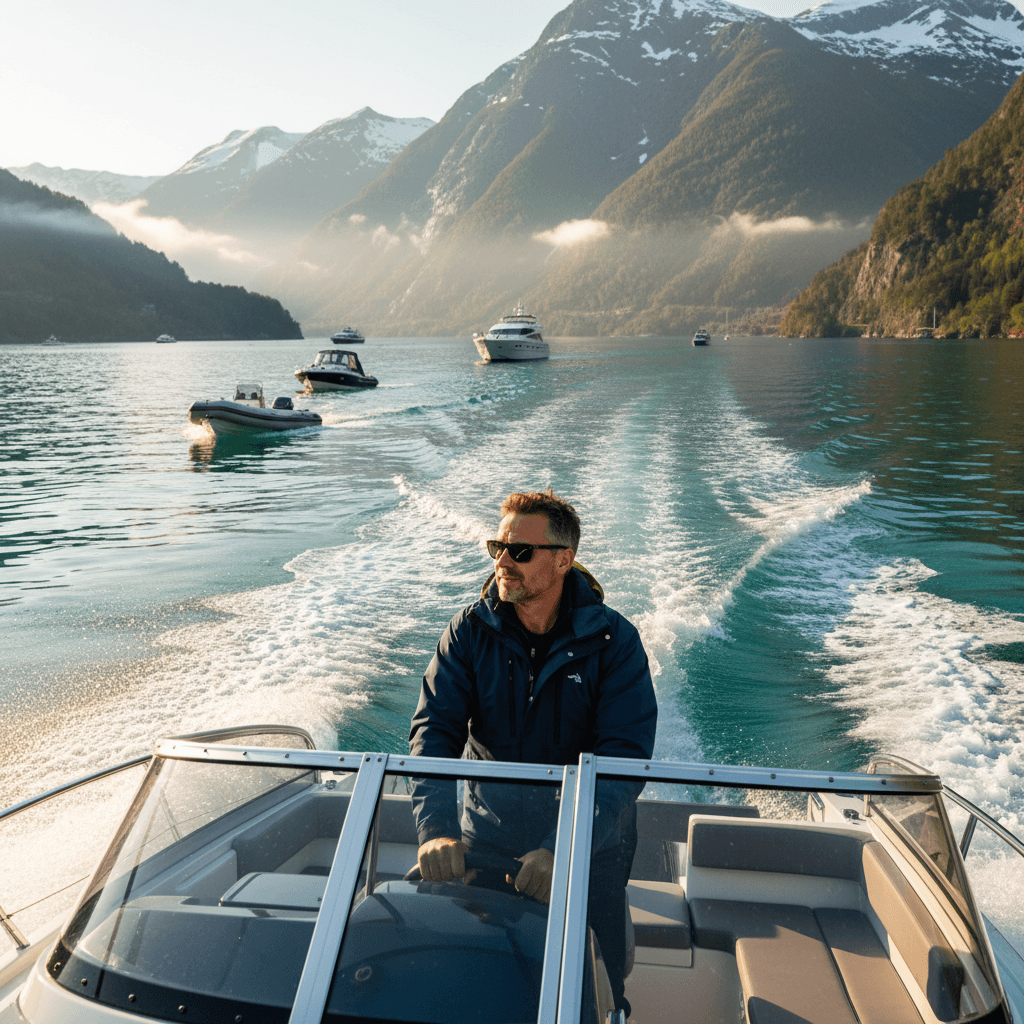
Daycruiser – A daycruiser is perfect for families. With a spacious cockpit, swim platform, and plenty of room for a picnic, you have everything you need for a day on the water. Most also offer some shelter from wind and sun.
Cabin Cruiser – For overnight trips, a cabin cruiser is ideal. Children can go below deck to rest, you have a toilet on board, and it feels safer with a roof overhead if the weather changes.
Bowrider – A bowrider gives children plenty of room to sit in the front and back. Many children love sitting in the bow (with a life jacket on!) and feeling the salt spray.
Kayak – For older children, a paddling trip in a kayak is a wonderful adventure. A double kayak with one adult and one child is a safe and fun combination.
Pre-Departure Checklist With Children
Here is a practical checklist you can use every time:
Before Leaving Shore
- [ ] Life jackets for all children – correct size and properly fitted
- [ ] Life jackets for all adults
- [ ] Check weather forecast – avoid strong winds and high waves with children on board
- [ ] Sunscreen, hat, and sunglasses – the sun is intense on the water
- [ ] Sufficient drinks and snacks – dehydration happens quickly in sun and wind
- [ ] Spare clothes in a dry bag – children get wet
- [ ] First aid kit with bandages and plasters
- [ ] Phone with full battery (emergency number 113)
- [ ] Tell someone on land where you are going and when you will return
- [ ] Swim ladder – important for children to get back on board from the water
Underway
- [ ] All children have life jackets ON (not just available)
- [ ] Keep low speed in waves and narrow passages
- [ ] Children sit – do not stand – when the boat is moving
- [ ] Let children participate in navigation and lookout (educational and engaging!)
- [ ] Watch for signs of seasickness – fresh air and looking at the horizon helps
When Swimming From the Boat
- [ ] Turn off the engine completely (not just in neutral)
- [ ] An adult in the water with younger children
- [ ] Keep a head count – always know how many are in the water
- [ ] Swim platform or ladder ready for reboarding
- [ ] Check current and temperature – cold water drains energy quickly
Age-Appropriate Tips
0–3 years: Keep trips short (1–2 hours). Ensure shade and calm. Always have an adult dedicated to the child.
3–6 years: Children start to enjoy trips but get bored quickly. Have books, toys, or a fishing rod ready. Stop for swimming and exploration.
6–12 years: The perfect age for learning seamanship. Let them help with mooring, reading the chart, and keeping lookout. Responsibility builds confidence.
12+ years: Many teenagers are ready for more responsibility. Let them try steering under supervision. It is great preparation for their own boat license when they are older.
Common Mistakes Parents Make
- The life jacket is in the bag, not on the child – A jacket saves no lives in a bag. Put it ON.
- Too long a trip – Children get tired, cold, and hungry faster than adults. Plan shorter than you think.
- Insufficient sun protection – The sea reflects sunlight, and children burn quickly.
- Forgetting to test the jacket – A jacket in the wrong size can slip off or fail to turn the child correctly.
- Alcohol – Have zero tolerance for alcohol among adults when children are on board. See the rules for alcohol at sea.
Make the Sea a Playground for Your Children
With the right preparation, the sea is a fantastic place for children. Use the Sea Safety Rules as your starting point, check the safety equipment, and plan the trip with your children's needs at the center. Have a great trip with the whole family!