Stress-Free Handover Checklist for Owners
Stress-Free Handover Checklist for Owners
A good handover sets the tone for the entire rental experience. When the renter feels safe and informed, the risk of accidents, misunderstandings, and damage goes down. And for you as the owner, it means a more relaxed experience.
Here is the complete checklist – from preparation to return.
Before Arrival: Prepare the Boat
Start preparations the day before or the same morning:
Cleaning
- [ ] Wash the deck and cockpit
- [ ] Wipe down seats and cushions
- [ ] Clean windows / windshield
- [ ] Clean the toilet and any cabin
- [ ] Empty rubbish
Technical Check
- [ ] Check engine oil and coolant
- [ ] Verify fuel level (fill up if you promise a full tank)
- [ ] Test that the engine starts without issues
- [ ] Check battery level
- [ ] Test navigation lights
- [ ] Test VHF radio
- [ ] Verify bilge pump works
Safety Equipment
- [ ] Life jackets (correct number for max capacity)
- [ ] Fire extinguisher (check date)
- [ ] First aid kit
- [ ] Lines and fenders
- [ ] Mooring equipment
- [ ] Anchor with sufficient chain/rope
Documents On Board
- [ ] Boat registration papers (copy)
- [ ] Insurance certificate (copy)
- [ ] Emergency numbers list (owner, coast guard, emergency services)
- [ ] Simple operating instructions for the boat
- [ ] Area chart/map (if no GPS)
At Arrival: The Handover (30–45 Minutes)
A thorough handover takes about half an hour. Do not rush through this – it saves you problems later.
1. Greet and Verify
- Check ID and boating license
- Walk through the rental agreement together
- Confirm deposit arrangement
2. Walk Around the Boat
- Point out any existing damage or scratches (document with photos)
- Show fenders and where they should be placed
- Demonstrate cleats and how to moor
3. Cockpit Walkthrough
- Show throttle, gear, steering, and trim
- Demonstrate engine start/stop
- Show switches for navigation lights, deck lights
- Show GPS/chartplotter and basic operation
- Show VHF radio and emergency channel (channel 16)
4. Safety Briefing
- Show where life jackets are stored
- Show fire extinguisher and explain use
- Show first aid kit
- Explain what to do in case of engine failure
- Walk through man-overboard procedure
5. Practical Information
- Show fuel gauge and explain consumption
- Explain fuel type and nearest marine fuel station
- Show fresh water tank and toilet (use and pump-out)
- Show shore power connection if applicable
- Walk through anchoring
6. Rules and Expectations
- Maximum speed in harbours and narrow channels
- Smoking on board?
- Alcohol policy
- Return agreement: time, fuel level, cleaning
Document the Condition
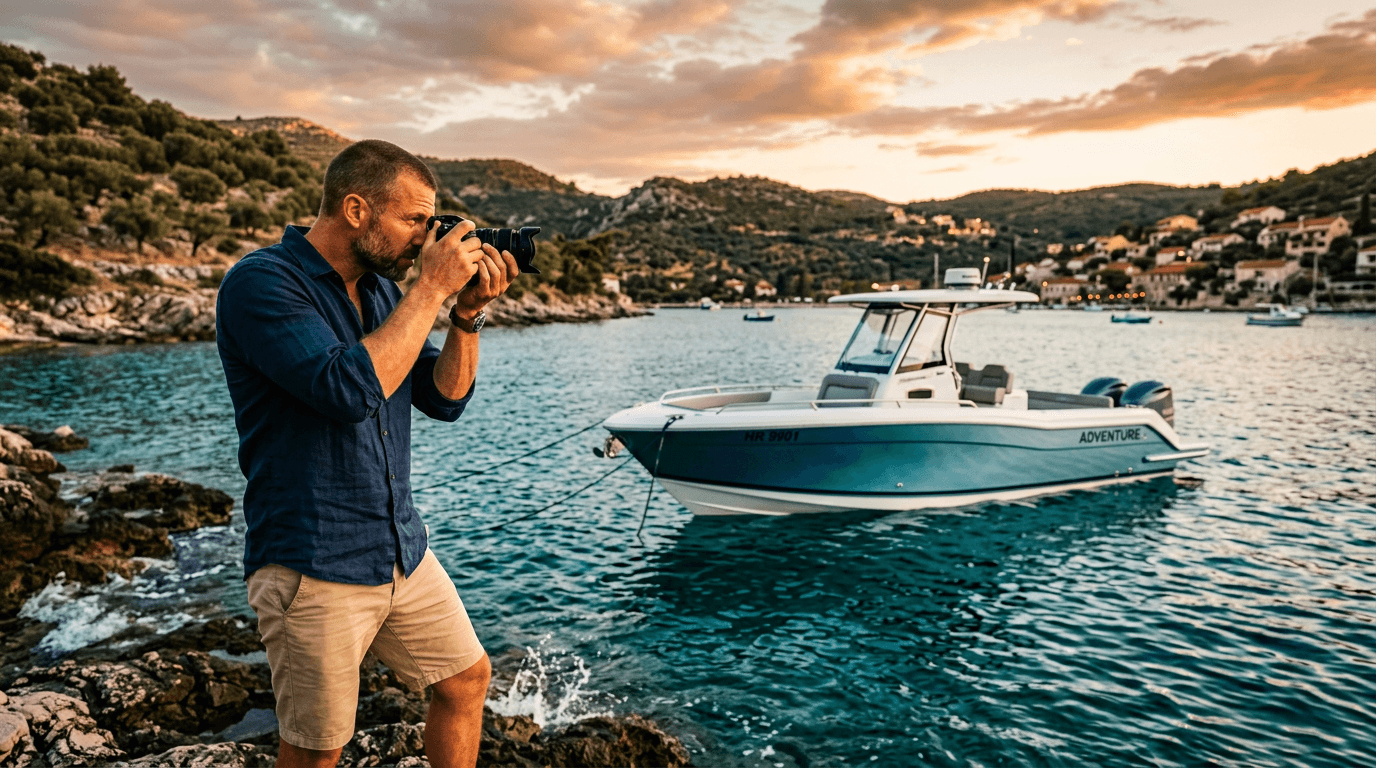
Take photos of the boat at handover – and at return. Use your phone and photograph:
- All four sides of the boat (starboard, port, bow, stern)
- Cockpit and seats
- Fuel level on the gauge
- Instrument panel (engine hours)
- Any existing damage (close-up)
Send the photos to the renter via messages or email, so both parties have documentation.
Return: Checklist
When the renter returns the boat:
- [ ] Check exterior for new damage or scratches
- [ ] Inspect cockpit and interior
- [ ] Check fuel level (as agreed?)
- [ ] Start the engine – everything normal?
- [ ] Take photos of the condition
- [ ] Verify all equipment (fenders, lines, life jackets)
- [ ] Release deposit if everything is in order
Tips for a Smooth Process
- Create a laminated instruction card that stays on board with the essentials
- Send a welcome SMS the day before with a reminder of time and location
- Be available by phone during the entire rental period
- Have a plan B for emergencies (engine failure, bad weather)
A good handover is also good marketing – satisfied renters leave great reviews and come back. For tips on further reducing risk, read Reduce Risk: Rules, Deposits, and Checklists.
Want to write a listing that matches this level of professionalism? See How to Write a Listing That Gets Booked.
List your boat on Ship O'Hoi and give renters a safe and memorable experience.