Electric Boat vs Petrol: When Does Electric Make Sense?
Electric Boat vs Petrol: When Does Electric Make Sense?
Electric cars have revolutionised road transport. But what about the water? Electric boats are on the rise, but are they ready to take over? In this guide, we compare electric and petrol boats point by point and examine when electric actually makes sense.
Status: Electric Boats in 2025
The electric boat market is growing rapidly. Brands such as Candela, X Shore, Evoy, and Rand have launched models that combine good design with electric propulsion. But the technology is still young compared to petrol-powered boats.
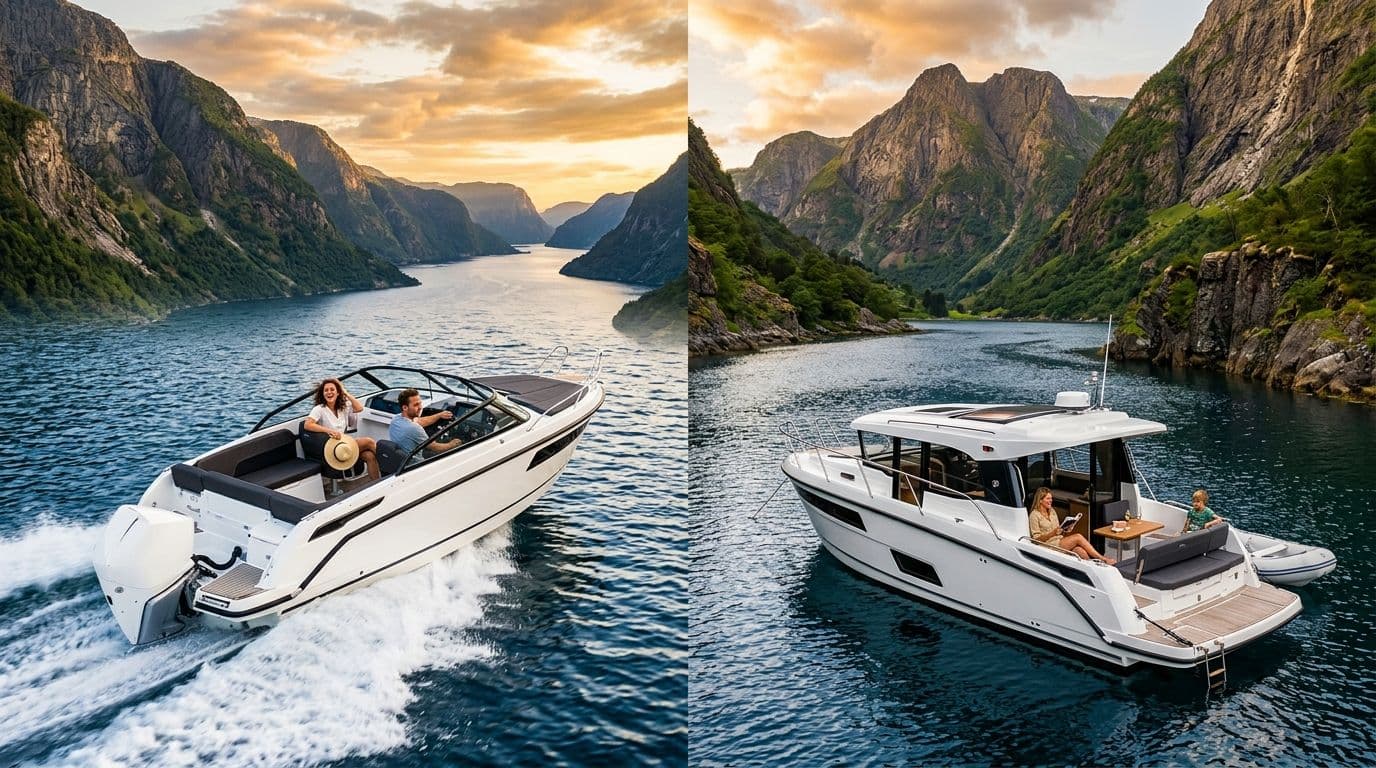
Most electric boats today are in the 16–26 foot range and intended for calm day trips, commuting, and short distances. Planing electric boats (such as the Candela C-8 with hydrofoils) are a game changer, but the price is still high.
Comparison: Electric vs Petrol
Feature | Electric Boat | Petrol Boat
Range (typical) | 20–50 nm (depending on speed) | 80–200+ nm
Top speed | 20–30 kn (traditional) / 30+ (foil) | 35–55+ kn
Cruising speed | 8–15 kn (for range) | 22–30 kn
Refuel/charge time | 4–10 hrs (standard) / 1–2 hrs (fast) | 5 minutes
Fuel cost per nm | €0.50–1.50 (electricity) | €2.50–6.00 (petrol)
Noise | Nearly silent | Noticeable
Emissions (local) | Zero | CO₂, NOx
Maintenance | Minimal | Oil changes, filters, impellers
Price (new boat) | High (€30,000–200,000+) | Moderate to high
Rental price/day | Similar or somewhat higher | Standard
Advantages of Electric Boats
Silence
The most immediate difference. An electric boat at cruising speed is nearly silent. You hear the waves, the birds, and the conversations on board – not a rumbling engine. For nature experiences, this is unbeatable.
Low Running Costs
Electricity costs a fraction of petrol. A typical electric boat uses around 5–15 kWh per hour at cruising speed, which translates to €1–3. An equivalent petrol boat can use 15–30 litres per hour (€25–50). Over a season, the savings are significant.
Zero Local Emissions
No exhaust, no oil leaks, no petrol smell. The electric boat is perfect for lakes, fjords, and areas with strict environmental requirements. Several Norwegian fjords are considering or have already introduced restrictions on fossil-powered boats.
Minimal Maintenance
Electric motors have far fewer moving parts. No oil changes, no spark plugs, no impellers. Maintenance is limited to battery checks and propeller inspections.
Instant Torque
Electric motors deliver full torque from a standstill. Acceleration is direct and smooth – no gear changes or turbo lag.
Disadvantages of Electric Boats
Range
The biggest drawback. A typical electric boat has 20–50 nautical miles of range, and it drops dramatically at high speed. At full throttle, range can halve. For longer coastal trips, this is a real limitation.
Charging Time
Filling up with petrol takes five minutes. Charging a boat battery takes hours. Even with fast charging, you are looking at 1–2 hours for 80% capacity. The infrastructure for charging at marinas is also limited.
Speed
Traditional electric boats are slower than petrol boats. Cruising speed for good range is 8–15 knots – much lower than petrol's 22–30 knots. Foil models partially solve this but are more expensive.
Price
Electric boats are more expensive to buy. The battery capacity needed to power a boat is large and costly. Over time, lower running costs can compensate, but it takes many seasons.
Weight
Batteries are heavy. An electric boat of the same size as a petrol boat typically weighs 30–50% more, which affects performance and capacity.
When Does Electric Make Sense?
Electric boats make the most sense in these scenarios:
- Short day trips (under 20 nm) in calm waters
- Lake and fjord use where a quiet engine matters
- Commuting on fixed, short routes with access to charging
- Environmentally sensitive areas with emissions restrictions
- Comfort-focused cruising where speed is not a priority
When Is Petrol Still Best?
- Longer trips along the coast (over 30 nm)
- Water sports requiring high speed and towing power
- Island hopping with many stops and varying distances
- Areas without charging infrastructure
- Emergency range needs (safety considerations)
The Future
Battery technology improves 5–10% per year in energy density. Hydrofoil technology (like Candela) drastically reduces energy needs by lifting the boat above the water. Charging infrastructure is expanding along the Scandinavian coast. In 5–10 years, electric boats will likely cover most use cases.
Summary
Today, the electric boat is an excellent choice for short, calm trips where silence and environment matter. For longer coastal cruising, water sports, and all-weather use, the petrol boat is still king. But the gap is closing fast. Try an electric boat at Ship O'Hoi and experience the silence on the water.
Read also: What does it cost to rent a boat?