What Is a RIB Boat? Everything You Need to Know
What Is a RIB Boat? Everything You Need to Know
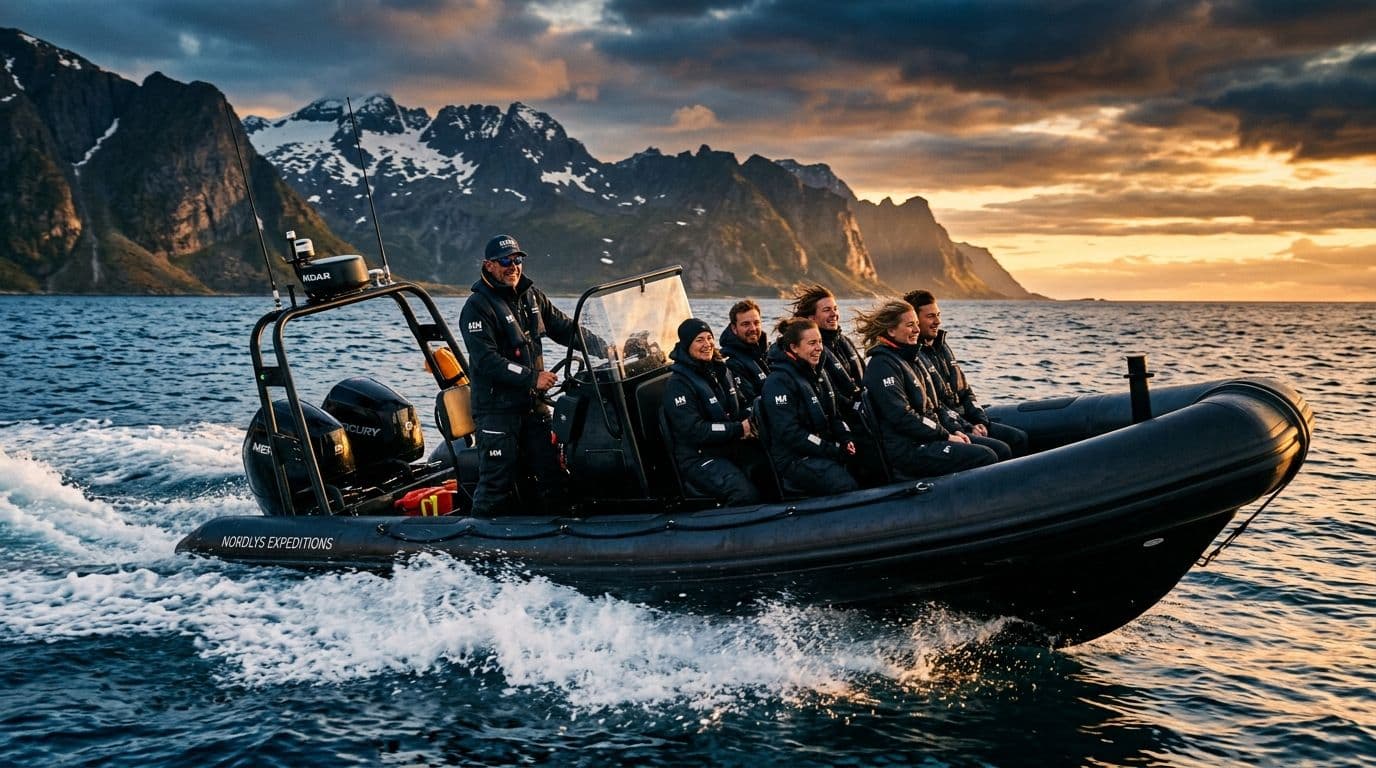
RIBs are everywhere along the Scandinavian coast – from the sheltered archipelagos to the open sea. But what exactly is a RIB, and why has it become so popular? In this guide, we explain everything you need to know about this unique boat type.
RIB: Rigid Inflatable Boat
RIB stands for Rigid Inflatable Boat – a boat with a rigid bottom and inflatable sides. The name describes the construction perfectly: the bottom (hull) is rigid, made of fibreglass, aluminium, or composite, while the sides (sponsons) are inflatable tubes of Hypalon or PVC.
This hybrid solution combines the best of two worlds: the rigid hull provides good handling and a platform for the engine, while the inflatable sides deliver extreme stability, buoyancy, and impact cushioning.
A Brief History
The RIB was developed in the 1960s by Atlantic College in Wales for use in rescue operations. The Royal National Lifeboat Institution (RNLI) adopted it quickly, and the military followed. Special forces, coast guards, and rescue services worldwide use RIBs as standard vessels.
In the 1990s and 2000s, the RIB became popular as a leisure boat, especially in Scandinavia. Norwegian fjords and archipelago environments proved to be perfect for the RIB's characteristics.
Construction and Materials
Hull: Most leisure RIBs have fibreglass hulls with a deep V-bottom (typically 20–24 degrees deadrise). Professional models often use aluminium for extra durability.
Sponsons: Hypalon (CSM) is the gold standard – durable, UV-resistant, and easy to repair. PVC is cheaper but has a shorter lifespan. The sponsons are divided into several separate chambers, so the boat stays afloat even if one chamber is punctured.
Deck: Open or semi-enclosed, with room for benches, jockey seats, or other furnishings depending on the model.
Advantages of RIBs
- Stability: The wide sponsons make the RIB almost impossible to capsize. It sits steady even in rough seas.
- Sea-keeping: The combination of rigid hull and soft sides provides excellent wave handling. You can maintain higher speeds in rough water than with traditional boats.
- Safety: The sponsons act as fenders and extra buoyancy. Even fully loaded with engine, a RIB is very difficult to sink.
- Speed: RIBs are fast. A 24-foot model with 300 hp easily exceeds 50 knots.
- Durability: The sponsons withstand contact with docks, rocks, and other boats without damage.
- Light weight: Compared to traditional boats of the same length, the RIB is lighter, which gives better performance and lower fuel consumption.
Disadvantages of RIBs
- Comfort: Seats are often simpler than in traditional boats. Upholstered jockey seats help, but a bowrider is more comfortable for lounging.
- Noise: Wind and engine noise are noticeable at high speed due to the open design.
- Sponson maintenance: Hypalon and PVC require cleaning and UV protection. Sponsons lose pressure over time and need topping up.
- Space: The sponsons take up room along the sides, reducing interior width compared to a hard-hull boat of the same length.
- Price: Quality RIBs are not cheap. A new 24-foot RIB with engine can cost €80,000–150,000.
Popular RIB Brands
Some of the best-known RIB manufacturers:
- Goldfish – Norwegian premium brand focused on speed and sea-keeping
- Brig – Ukrainian producer with a wide leisure range
- Zodiac – French classic, originally military and professional
- Williams – British brand known for tender RIBs
- Nimbus / Alukin – Scandinavian quality in aluminium
Best Uses for RIBs
- Island hopping: Fast transport between islands in the archipelago
- Fishing: Stable platform, good space, and easy water access
- Water sports: Strong engine and good towing power for skiing and wakeboarding
- Diving: Low rear freeboard makes it easy to get in and out
- Tender: Perfect as a tender to a larger vessel
Who Is the RIB For?
The RIB is for you if you want speed, safety, and all-weather capability in one package. It is not the most comfortable lounge boat, but it gets you where you want to go – fast and safely, regardless of weather. For Scandinavian coastal waters, with their changing conditions and long distances, the RIB is a natural choice.
Read also: RIB vs archipelago jeep vs bowrider →